






*Exclusions apply. By subscribing, I confirm that I am 18 years of age or older and agree that my personal information may be used by SafetyEyeglasses.com to send me news, special offers, and other marketing communications. For more details, please review our Terms & Conditions and Privacy Policy. You may unsubscribe at any time.
- Safety Glasses
Collection
Feature
Shop By

Blog
Types Of Lenses For Glasses
Choosing new glasses is exciting. But selecting the right lenses can feel confusing. The simple material holding your prescription is the most important part of your new eyewear. It directly determines how clearly you see. It also impacts how comfortable your glasses feel every day. Lenses are no longer mere pieces of glass. Most advanced options are available today.
Options range from simple single-vision lenses to advanced progressive lenses. You may require work protection or a new pair of reading glasses, but it is important to know what is available. Single vision, bifocal, trifocal, and progressive lenses will all be covered in this handbook. You will ultimately know which lens best suits your vision and price range.
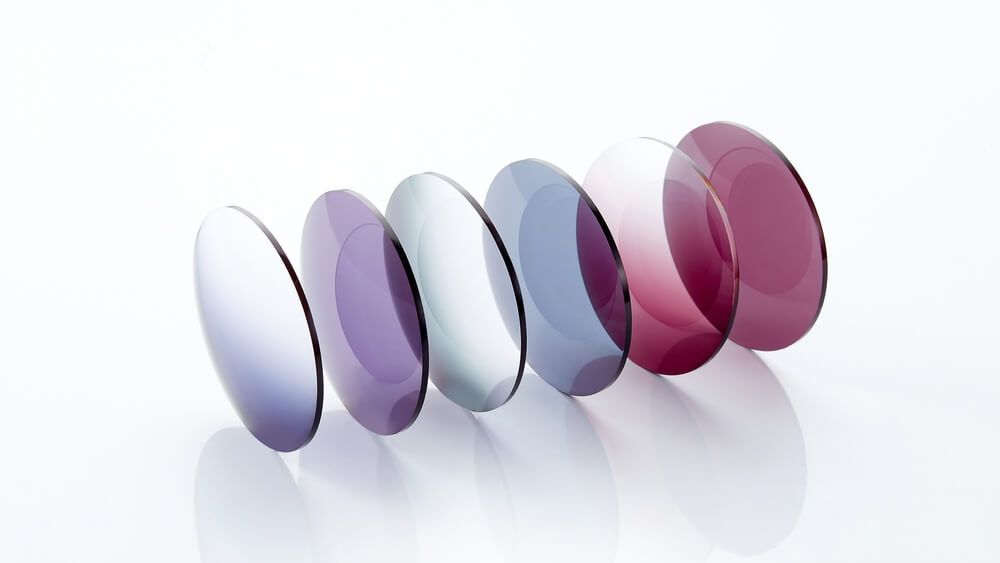
Understanding and Selecting Lens Types
With a wide variety of lens materials and designs, the eyewear market is diversified. Finding the right pair for daily activities and job safety will be easier if you are aware of the many lens types.
Different Types Of Lenses For Glasses
When you select lenses, you choose the material first. You also choose the optical design. The material affects thickness and weight. High-index plastic is much thinner than standard plastic. This is excellent for strong prescriptions. Polycarbonate is extremely durable. It is highly impact-resistant. This material is commonly used in safety glasses. Trivex is another impact-resistant material.
It often provides better optical clarity than polycarbonate. The optical design determines your viewing zones. Do you need a clear vision for only one distance? That requires single vision. Do you need corrections for multiple distances? That needs bifocal, trifocal, or progressive glasses. Understanding these lenses on glasses will assure optimal optical performance.
Best Lenses For Glasses
The most suitable glasses lenses depend totally on your lifestyle and prescription. A high-quality single vision lens is often the best choice if you are short-sighted and less than 40 years old. Progressive lenses are typically the best overall choice for people above 40 who require correction of both distance and reading. They offer a seamless, free line transition.
In industrial work where the line is to be referred to frequently, safety glasses with bifocals may be safer. The ideal lens will be a one-piece lens. It is of good quality, durable, and has viewing ranges that are exactly matched to your daily job tasks. Always include some required finishes, such as anti-reflective and UV coverage.
Getting & Replacing Prescription Lenses
Sometimes you love your frames. But you just need new lenses. This situation is quite common. An eye care professional is in the best position to handle the process of lens removal from glasses. Frames are made with tiny screws or plastic grooves to fit the lenses. Trying to force them out yourself can easily snap the frame material. Leave how to remove lenses from glasses to the optician to prevent damage.
You can get new lenses for your glasses at any local optical shop. Many specialized online retailers also offer this service. They allow you to mail in your current frames. They then install the new prescription bifocals and ship the completed glasses back to you.
Affordable online retailers are always the place to seek cheap glasses with prescription lenses. They use less overhead compared to the physical stores. This enables them to give substantial discounts on ordinary lenses and ordinary frames.
What Is a Single Vision Lens
Single vision lenses are the most common and basic type of prescription lens, offering a powerful, clear correction across the entire lens surface for a single distance. These reliable lenses give you the same magnification right to the edge. Whether you need to focus at a long range or at close range, they deliver smooth magnification.

Understanding Single Vision Lenses
Single vision lenses are the basis of optometry, prescribed to correct common refractive errors like myopia (nearsightedness), hyperopia (farsightedness), and astigmatism.
The defining characteristic of a lens-type single vision is its consistency. It is the lens that is made with a single power across the whole area of the lens. There are no sections, segments, or zones of different magnification as seen with bifocals or progressives. This gives them the best use in uncomplicated vision correction.
Single vision glasses are designed to suit one focal requirement. If an individual has nearsightedness, the single vision lens will be developed to rectify the vision at a distance. In case that individual, too, requires help in reading because of presbyopia. They would require a second pair of single vision lenses tailored to near work, or a multifocal pair.
Single Vision Glasses
Single vision glasses use a standard prescription and are simple in design. They are more comfortable for new users. They provide the widest, sharpest area of sight as long as they are used. Since there are no side view distortions or intricate routes to follow.
Depending on the prescription, single vision glasses can be worn constantly. You may only use them when driving or going to study if you have mild nearsightedness. If your single vision glasses are for driving, you cannot use them for driving because they will blur distance vision. You can wear them comfortably all the time. You should have a single vision prescription that corrects a mild amount of astigmatism or a simple distance problem. After you develop presbyopia, you will need to use different powers for distance and near. You can use two pairs of single vision lenses or switch to multifocals.
Importance of PD for single vision lenses
Pupillary Distance is a vital measurement of every prescription lens, including single vision. It involves the measurement of the distance between the centres of your pupils. Read here how to measure pupillary distance at home. The position of the optical center of the lens is introduced so that it is placed absolutely in front of your pupils. Single vision lenses are easier to wear than progressive lenses. But a poor PD still results in prismatic effects, which strain the eye. It produces headaches and makes the wearer generally uncomfortable, particularly when the prescription is strong.
Types of Single Vision Glasses
The precise focal length that single vision lenses correct is frequently used to classify them.
Single Vision Distance Glasses
These lenses have a prescription specifically calculated to allow the wearer to see objects clearly far away. Single-vision distance glasses are also prescribed to individuals with myopia. They are generally used during activities such as driving, watching TV, or viewing scenery. The lens has the same distance power at the top and the bottom.
Single Vision Reading Glasses
They are prescribed to individuals with presbyopia to increase their focus on objects at a short distance. When a person is reading a book, sewing, or crafting something intricate, single-vision reading glasses are usually worn.
Single Vision Computer Glasses
These are an intermediate option. Single vision computer glasses are optimized for the typical arm's length distance of a computer screen. The prescription is not as powerful as reading glasses but is stronger than distance glasses. They are particularly crucial for minimizing eye strain brought on by extended screen time when wearing distance or reading-only glasses.
Single Vision Lenses: Costs and Pricing
The affordability of these lenses makes them attractive. They can vary considerably depending on materials and coatings. The single vision lens price is usually the cheapest of all the types of prescription lenses (bifocals, trifocals, and progressives). Their price variability depends heavily on the lens material and any extra treatments. A simple pair can be much cheaper than a pair of ultra-thin high-index material with high-end anti-reflective and scratch-resistant coating. However, the design is very basic, making it the cheapest alternative.
What Are Bifocal Lenses
Bifocals were a game-changer. They are a time-tested, traditional glasses to see clearly at two distances at once. These lenses are highly effective and have been used successfully for centuries.
They combine two different corrective powers into one single lens. This design addresses the common issue of aging eyes needing help with close-up tasks.
The term "bifocal" simply means two focus points. The lens has a large upper area for distance vision. It includes a small, visibly demarcated segment at the bottom for near vision. This is the bifocal meaning.
Bifocals are used to correct presbyopia. This is the natural inability of the eye to focus close-up. It typically affects people over age 40. They provide a clear vision for faraway tasks like driving. They also allow you to see up close for reading a menu or a book.

Are Bifocals Progressive Lenses?
They are fundamentally different. This is a very important distinction. The distance and reading sections of bifocals are distinguished by a clear, sharp line. This line is where the image abruptly "jumps." Progressive lenses have no line. They offer a smooth, continuous change in power. The bottom section of the lens is the reading bifocal power. It is specifically calibrated for close tasks within 12 to 18 inches.
Safety Glasses With Bifocals
For tradespeople, safety glasses with bifocals are a mandatory piece of equipment. The line ensures they can quickly look up at a job site and then down at a gauge or tool. This eliminates the need to carry two separate pairs of glasses.
All bifocals are prescription bifocals. They are fully customized based on your exact vision test results. You can find cheap bifocals by choosing standard plastic materials.
Types & Buying Options for Bifocals
The main variations in bifocals involve the dividing line and where you choose to purchase them. Cheap bifocals usually use standard entry-level materials. They will have the traditional, very visible dividing line. They are the cheapest bifocal option available for dual-vision correction.
Cheap no-line bifocals term can be confusing. Truly," no line" lenses are progressives. However, some retailers use cheap no-line bifocals to describe value-priced progressive lenses. These eliminate the visible line but may have narrower zones of clear vision than expensive premium progressives.
The progressive lens option is typically what you look for when looking for no-line bifocals online. Unlike conventional lined lenses, they provide a smoother visual experience and a superior appearance.
Purchasing bifocals online is a convenient and affordable process. You should provide an accurate and updated prescription. When buying bifocals online, make sure to include your Pupillary Distance (PD). To properly position the reading portion in the lens, this measurement is essential.
Cost & Adapting to Bifocals
Understanding the cost factors and the necessary adjustment period helps new wearers feel prepared. The cost of bifocals varies greatly. Ordinary lined bifocals can be quite cheap. There are also other features, such as thin high-index material, anti-reflective finishes, or photochromic tints that can add a lot to the cost. Online bifocals are available at discount prices. However, premium options will cost more. The type of material is the biggest price factor.
How to get used to bifocals (Tips and Techniques)
The adaptation period usually lasts between a few days and two full weeks.
- Point your nose at everything: When looking at something, move your head. Do not just move your eyes. This ensures you are looking through the correct segment.
- Practice on stairs: Be very cautious when descending stairs. You must look down through the upper distance section to avoid tripping. Do not look through the reading segment.
- Wear them always: Wear your new bifocals every day. This assists your brain in accepting the change faster. Do not switch to old glasses at this time.
Why are bifocals hard to get used to? The main difficulty is the "image jump." When your eye moves across the visible dividing line, the image instantly shifts in magnification. This swift shift may lead to a short-lived sense of disorientation, lightheadedness, or even mild headaches. That is why certain individuals like to buy bifocals online to avoid this feeling. Eventually, your brain learns to ignore the jump.
What Are Trifocal Lenses
Although today trifocal lenses mostly take a back seat to progressive lenses, they are actually a new development of bifocals. They work well to fill one of the most critical gaps in vision correction, offering three focal points in one lens. This design is highly practical for individuals who need defined clarity at far, intermediate, and near distances without relying on multiple pairs of glasses.
Trifocal glasses are eyeglasses that incorporate three different prescription strengths within one lens. Unlike single vision or bifocal glasses, trifocals feature two distinct, visible horizontal lines. These lines separate the lens into three distinct sections. The biggest top section is distance, the small middle strip is intermediate range, and the bottom section is up-close tasks.

How Do They Work?
Segment size and placement divide the functionality of the lens. The top zone is used for looking across a room or driving. The intermediate zone, usually about 7mm high, is perfect for objects at arm's length. The lowest segment provides the strongest magnification, making it the trifocal reading glasses zone. This allows for a comfortable reading experience with books and phone screens.
Disadvantages Of Trifocal Lenses
The key disadvantages of trifocal lenses stem from the visible dividing lines that appear between the focal points. They cause two instances of "image jump", a sudden shift in magnification when your eye crosses the line. This can be visually jarring and cause a longer or more difficult adjustment period than progressive lenses. Furthermore, the intermediate zone is a fixed power, meaning it may not offer as much depth of field as a smooth progressive corridor.
Local opticians will sell you trifocals, or you can order them with no doubts at SafetyEyeGlasses online. The ideal location to purchase trifocal spectacles typically depends on whether you value professional fitting (from a local optician) or affordability (from an online store). When ordering trifocal glasses, ensure you provide accurate measurements for your segment height, as this is crucial for the intermediate zone placement.
Trifocal Glasses Cost And Replacement
The trifocal glasses are usually situated between standard bifocals and premium progressive lenses. They require more complex manufacturing and fitting than bifocals to ensure the precise placement of the intermediate strip.
If you change your prescription or scratch your existing pair, a trifocal lens replacement involves installing a new lens into your current frame. This is a common and straightforward process handled by optical labs.
What Is A Progressive Lens
Modern presbyopia glasses are progressive lenses. They enable you to see at any distance without the distractions of lines on traditional bifocals or trifocals. This seamless visual experience is why they are often considered the premium progressive lens option for correcting age-related vision changes. Progressive lenses represent the standard of multifocal lens technology. They offer a natural and comfortable solution for those needing assistance with multiple viewing distances.
A progressive lens is an advanced multifocal lens in which the power change across the lens surface is gradual and continuous. Unlike bifocals, this lens changes gradually from distance vision at the top to reading vision at the bottom. This eliminates the "image jump" associated with lined lenses and provides a much more natural, continuous visual experience. They are sometimes mistakenly referred to as "no-line bifocals."
Progressive Lens Diagram
While you won't see any lines on the lens itself, a progressive lens diagram visually explains its complex design. The lens is divided into three functional areas. The wide distance viewing zone at the top, the narrow central vertical channel, known as the "progression corridor,". It holds the intermediate power and the wide reading zone at the bottom. The sides of the corridor contain soft, peripheral blur or distortion, which wearers learn to ignore by simply pointing their nose at what they want to focus on, rather than shifting their eyes side-to-side.
Progressive Lens Types
The primary distinction in progressive lens types is between conventional and digital (Free-Form) designs. Traditional progressives are custom-made in bulk, i.e., the lens is more or less the same size, no matter the frame you wear. Digital Free-Form technology involves intricate computer software to point-by-point customize the lens surface. The high-order customization means greatly expanded, well-defined viewing areas and far less peripheral distortion. They greatly enhance comfort and reduce the adjustment time.
Progressive Lens Options
Beyond the basic lens material, progressive lens options are extensive. Such options are specialized designs related to the activities with an additional wide intermediate zone. These also involve essential functional additions such as durable anti-reflective treatment, scratch resistance, and photochromic or blue-light filtration coatings.
Premium Progressive Lens
The modern progressive lens has the most advanced digital Free-Form technology. These lenses are customized according to your personal measurements, including the fit of the frame on your face. This high-level customization recalculates the power on the whole lens surface. It ensures the widest possible fields of view and minimizes peripheral distortion. This makes them the easiest lenses to adjust to and wear comfortably throughout the day.
Progressive Lens Costs And Prices
The advanced, refined technology used to produce progressive lenses makes them costly compared to the lined ones. It is also worth noting that the price of these lenses is directly proportional to their complexity in production. The general progressive lens price may differ significantly, even between entry-level designs and high-end customized designs. You'll often see different progressive lens prices quoted based on the lens material. High-index materials and specialized coatings will also drive up the final cost. Read here and get the know how progressive lenses work correctly.
A cheap progressive lens is generally a traditional, non-digital lens construct manufactured from a standard plastic. They serve the same purpose as multifocal correction, but have tighter viewing ranges and stronger peripheral distortion. This may complicate the first adjustment phase and even restrict comfortable vision relative to a premium progressive lens. They are very economical but lack clarity and adaptability. When buying progressive lenses, it is critical to understand that the greater the price, the better the lenses are. The better the technology, the more convenient the experience.
Purchasing and Replacing Progressive Lenses
When buying progressive lenses, it is necessary to pay attention to details and especially to the right measurements. Purchasing a progressive lens online is an easy way to get competitive prices. However, it relies a lot on the delivery of extremely precise measurements of Pupillary Distance. Progressive lenses are very specific to the frame. A small error in these measurements can greatly compromise vision and comfort. For accurate measurements, the majority of progressive lens online sellers need you to mail in your current frames or take images.

See What's New
Get an exclusive first look at our latest promotions and collections!

50% OFF on Safety Frames
When Lenses Are Purchased. Enter your email to unlock this exclusive safety eyewear deal.


Leave your comment