




*Exclusions apply. By subscribing, I confirm that I am 18 years of age or older and agree that my personal information may be used by SafetyEyeglasses.com to send me news, special offers, and other marketing communications. For more details, please review our Terms & Conditions and Privacy Policy. You may unsubscribe at any time.
- Safety Glasses
Collection
Feature
Shop By
Blog
What Are the Different Parts of Glasses Called?
Knowing the single parts of your glasses is not only about technical terms. It is about taking care of your vision and protecting your eyes. Each of them, even the tiniest screw or even the resilience of the temples of glasses, contributes to the way you perceive the world. When operating in high-risk areas, a loose safety glasses nose piece is the fine line between a productive day and a safety incident. This guide will help you choose the best fit for your unique facial shape by going over the essential elements of your frames.
Understanding the Basic Parts of Glasses
The first thing you need to know when selecting the correct eyewear is the anatomy of a frame. Each of the parts has its purpose, as they are comfortable, durable, and precise in their optical performance. Whether you are purchasing ordinary spectacles or those with high-impact protection, understanding these terms is the initial step towards finding a perfect fit.
What Is a Nose Bridge?
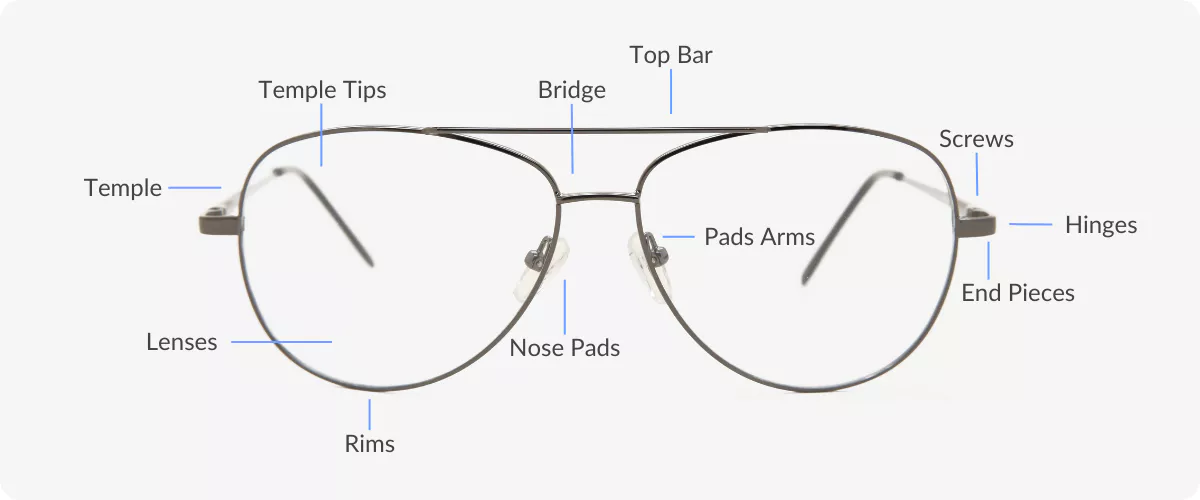
The nose bridge is the central arch of the frame that is placed on the nose. It is probably the most significant component of the glasses as it carries approximately 80% of the total weight. A well-designed bridge prevents the glasses from sliding down or pinching your skin. There are several styles, such as the saddle bridge for even weight distribution or the keyhole bridge, which provides a classic look and reduces pressure on the bridge of the nose.
What Do You Call the Sides of Glasses?
The "arms" that extend from the frame front to your ears are professionally known as temples. While some people refer to them as the eyeglass stem, "temples" is the industry standard. These components ensure that the glasses remain stable on your head. These often have rounded temples tips and are sometimes covered in rubber to give a non-slip surface behind the ears.
Key Frame Components
Beyond the bridge and temples, several other parts work together:
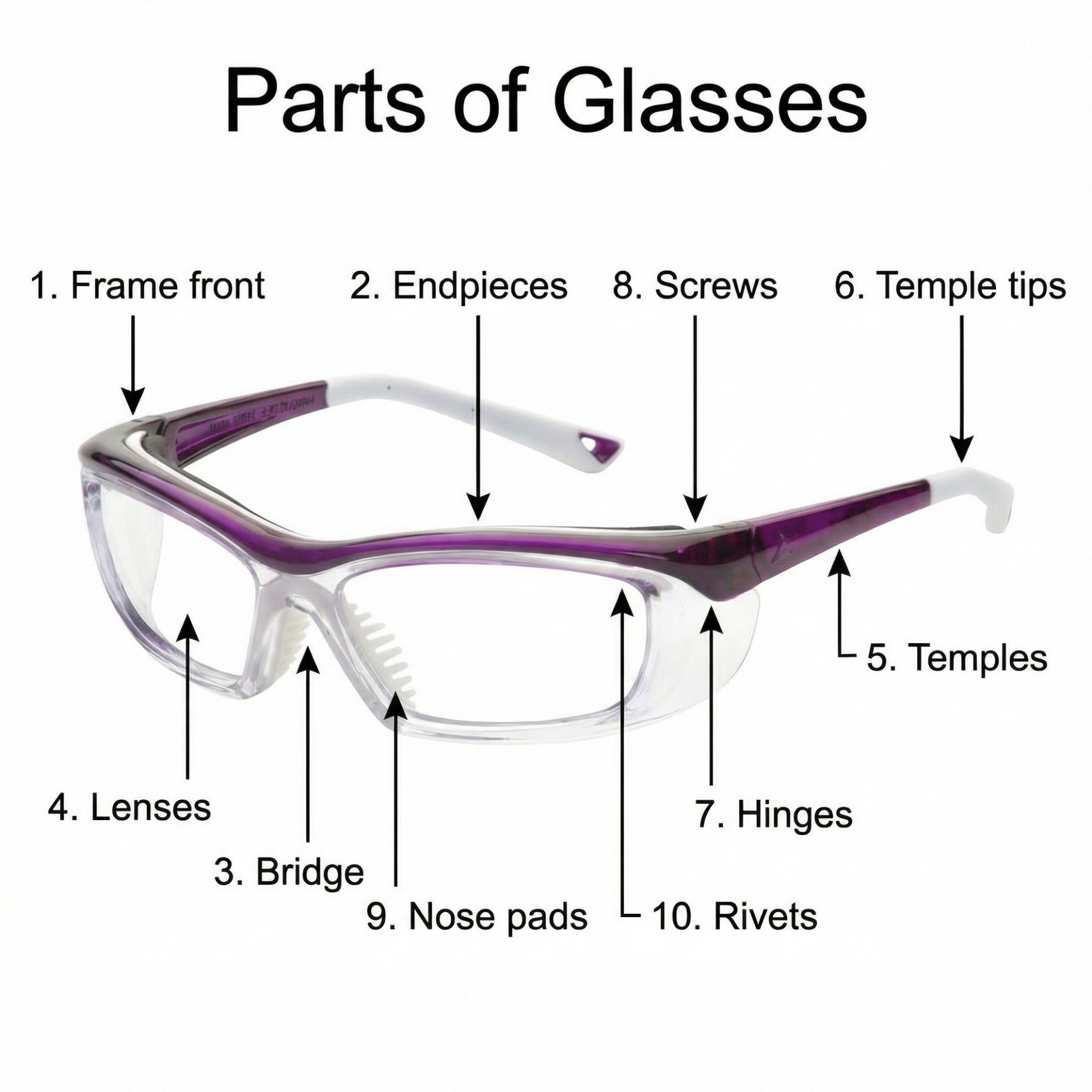
(Add the image of eyeglasses with the following parts)
- Hinges: These joints are between the temples and the frame front, where the arms are folded towards the central part.
- Lenses: The clear or tinted material held within the rims that provides vision correction or physical protection.
- End Pieces: The outer corners of the frame front where the hinges are attached.
These parts are essential to understand in terms of maintenance and safety. Should a screw come loose in a hinge, or do you need to order a worn nose piece? Understanding the proper terminology allows you to buy the correct item. Moreover, in factory environments, the recognition of components such as integrated side shields is a guarantee that you are complying with certain safety standards. By communicating with your provider, you can get better-fitting gear and long-term eye health.
Explanation of the Nose Area Along Bridge and Fit
The nose area is where most fit issues occur. Because everyone’s nasal bone is shaped differently, manufacturers have developed several nose bridge types. The weight is distributed across the nose by a "Saddle Bridge" that follows the curve. A Keyhole Bridge is a nose shape that resembles an old-fashioned keyhole. It does not cover the tip of the bridge, which is excellent at relieving pressure.
To add more customization, many frames use nose pads. These are the small, soft cushions that rest directly on your skin. There are various types of nose pads made from silicone, PVC, or even titanium. In the world of industrial safety, the safety glasses nose piece is often a single, soft rubber component. 3m safety glasses nose piece is specifically engineered to grip the skin even during sweating or moving quickly.
So, where should glasses sit on the nose? Ideally, they should rest on the upper slope of the bridge, aligned with your pupils. If they sit too low, your vision will be distorted. Or if they sit too high, they may rub against your eyelashes. This is why safety glasses with adjustable nose piece designs are so popular. They allow the user to bend the pad arms to perfectly match their nasal slope. Besides, they ensure the glasses stay secure during a long work shift.
Difference between High vs Low Nose Bridge
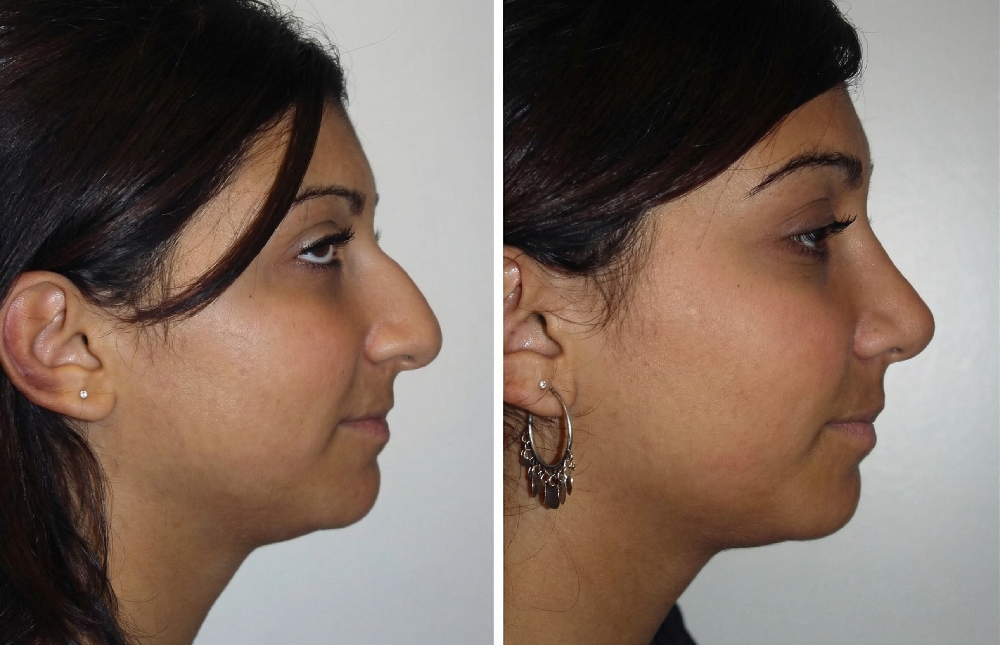
The trick to finding eyewear that doesn’t slip is to understand the geometry of your face. Glasses sliding down or pinching are most frequently caused by an incompatibility between the frame and the nose shape of the wearer. You can also determine whether you have a high bridge or a low bridge, which will help you select a frame that will fit perfectly on your face.
High vs Low Nose Bridge
The term "nose bridge" in the optical world refers to the slope and position of the nasal bone between your eyes. A high nose bridge begins above the level of your pupils, usually featuring a more prominent or narrow bone structure. Conversely, a low nose bridge begins at or below the level of your pupils. This typically results in a wider, flatter slope that offers less of an "anchor" for standard glasses to grip.
Low Bridge vs High Bridge Glasses
With a narrow arch and smaller nose pads, standard glasses are frequently made with a high bridge. With their altered geometry, low bridge glasses are frequently referred to as a "Universal Fit" feature. In order to provide "lift" and angle the lenses away from the cheekbones, these frames include bigger, more noticeable nose pads. By doing this, a common issue with lower bridges is avoided. The bottom of the frame is resting against the face.
Difference Between High and Low Nose Bridge
The primary difference lies in stability and lens alignment. On a high bridge, the nasal bone acts as a natural shelf. On a low bridge, the glasses must rely on specialized pad placement to stay secure. The optical center of the lens is not fixed and may move without the correct fit. This results in blurred vision and prolonged eye strain during long working hours.
How to Identify Your Nose Bridge Type
Look straight into a mirror to determine your type. Find the bridge of your nose, the bony part where it joins your forehead. When this point begins above your pupils, you have a high bridge. You have a low bridge if the curvature starts exactly on or below your pupils or if your nose is flatter.
Ask yourself three questions:
- Do your glasses always slide down your nose?
- Does the frame bottom touch your cheeks when you smile?
- Do your eyelashes often touch the lens?
When the answer to these is yes, you probably have a low bridge.
A low bridge nose is a common and natural anatomical variation where the bridge of the nose is less prominent. It requires eyewear with a wider bridge opening and extended nose pads to provide the necessary support. Identifying this early ensures you buy gear that feels weightless and stays secure all day long.
What Are Low Bridge Fit Glasses?

When you find it difficult to keep your glasses on your bridge and on your cheeks, then you likely have a fit problem with your nose bridge. Normal eyewear is usually configured to a certain profile of the face. It does not consider the elegant variety of the human anatomy. This is where "Low Bridge Fit" glasses, sometimes called Universal Fit, come into play.
Low Bridge Fit glasses are frames specially engineered for individuals with a lower nasal bridge, higher cheekbones, or a wider facial structure. Unlike standard frames, these glasses feature enlarged nose pads that sit closer together. This creates the necessary "lift" to keep the glasses from sliding. The lenses are also tilted at an angle, called a pantoscopic tilt. The frame curve is flattened so that the bottom of the rims does not touch the cheeks of the wearer.
Who Should Wear Low Bridge Glasses?
You should consider Low Bridge Fit if the "bridge" of your nose sits level with or below your pupils. This fit is also ideal for those who find that standard glasses rest on their cheekbones rather than their nose. While it is often associated with specific national backgrounds. Low bridge anatomy is found across all populations and is simply a matter of individual bone structure.
Benefits of Proper Bridge Fit
A proper bridge fit transforms your daily experience. It ensures that the optical center of your lenses is in the right position, exactly facing your pupils, causing no strain and blurry vision to the eye. In addition to optics, the main advantage is stability. You will not always need to adjust your glasses up. Something that is particularly important in active settings or when using protective equipment.
Common Fit Problems and Solutions
- Problem: Glasses sliding down.
Solution: Extended nose pads provided by a low bridge fit.
- Problem: Lenses fogging up due to cheek contact.
Solution: Increased lens tilt and larger pads to create airflow.
- Problem: Eyelashes touching the lenses.
Solution: Readjusted the geometry of the bridge, which is now more distant to the eye.
The right fit implies that your glasses do not work against you but with you.
Safety Eyeglasses and Protective Features
Your eyes need some protection that your everyday eyewear just cannot afford in a dangerous setting. Whereas everyday frames emphasize aesthetic, industrial-grade gear emphasizes structural integrity and peripheral coverage. Every worker must understand the special ingredients that convert a frame into a life-saving device.
One of the most critical additions to any industrial frame is safety side shields for glasses. The front lenses will shield your line of sight, but lateral gaps give a significant weakness. These shields offer a physical defense against flying debris, sparks, and chemical splashes and are securely fastened to the temples of glasses. Without them, a fast-moving particle might quickly cause irreversible damage by sliding around the lens.
What Are Side Shields and Why Do They Matter?
Side shields matter because they complete the protective seal. Most eye injuries occur due to small particles entering from the periphery. These shields are typically made from high-impact polycarbonate and are designed to fit the specific temple part of your frame perfectly. Whether they are permanently bonded or removable for office use. They ensure that the temple parts of glasses do more than just hold the frame on your head. Besides, they become an active part of your safety shield.
Where to Buy Side Shields for Glasses
Certified shields are available at professional stores Safetyeyeglasses. The purchasing of shields is crucial. They need to fit into a particular portion of your frame to prevent loose fittings. That might slip off during a shift. Search ANSI Z87.1-certified options to make sure they comply with federal impact standards.
Safety Glasses vs Regular Glasses
Standard glasses have flimsy frames and a fragile nasal bridge that could shatter in an accident. Safety glasses, on the other hand, have a heavy-duty nose bridge that can endure tremendous forces and are composed of stronger materials. Regular glasses may have a similar appearance, but they don't have the "Z87" stamp that denotes genuine industrial protection on the temple portions of glasses. When the risks are great, don't jeopardize your vision on a regular frame.
Glasses Parts Available on SafetyEyeglasses
At SafetyEyeglasses, we specialize in providing every component you need for a secure workplace. Our overview of glasses parts includes everything from replacement temples for glasses to specialized 3m safety glasses nose piece replacements. We understand that a single broken part shouldn't mean you have to throw away an entire pair of expensive safety gear.
Choosing the right safety frames and components is easy with our detailed filter system. You can shop specifically for nose bridge types that match your facial profile. Our buying guide emphasizes adjustable features for workplace protection, such as telescoping temples and ratcheting hinges. These allow for a "set it and forget it" fit that lasts all day.
When you buy from us, you aren't just getting a pair of glasses; you are getting a complete vision solution. We offer:
- Integrated Side Shields: For permanent, high-impact protection.
- Anti-Slip Temple Tips: To ensure the eyeglass stem stays put.
- Custom Prescription Lenses: Built into ANSI-rated safety frames.
By understanding the temple part, the nose bridge, and the fit requirements of your face, you can select the best protective gear for your career. Visit SafetyEyeglasses to explore our full range of parts and find the perfect fit for your eyes today.
See What's New
Get an exclusive first look at our latest promotions and collections!

50% OFF on Safety Frames
When Lenses Are Purchased. Enter your email to unlock this exclusive safety eyewear deal.


Leave your comment