




*Exclusions apply. By subscribing, I confirm that I am 18 years of age or older and agree that my personal information may be used by SafetyEyeglasses.com to send me news, special offers, and other marketing communications. For more details, please review our Terms & Conditions and Privacy Policy. You may unsubscribe at any time.
- Safety Glasses
Collection
Feature
Shop By
Blog
What Are Single Vision Lenses? The Complete 2026 Guide
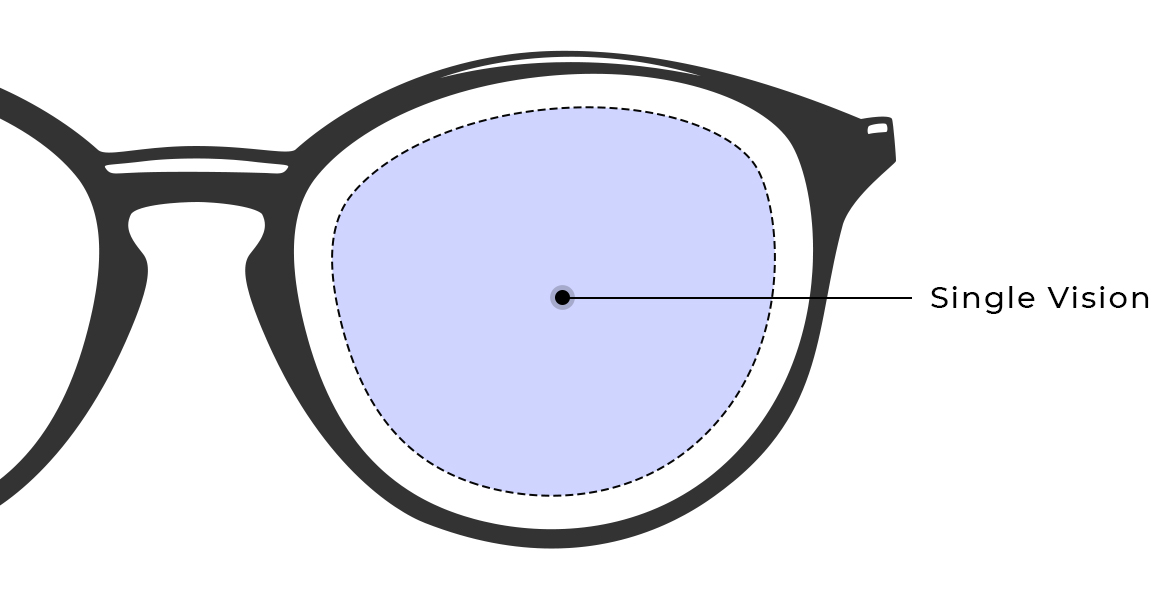
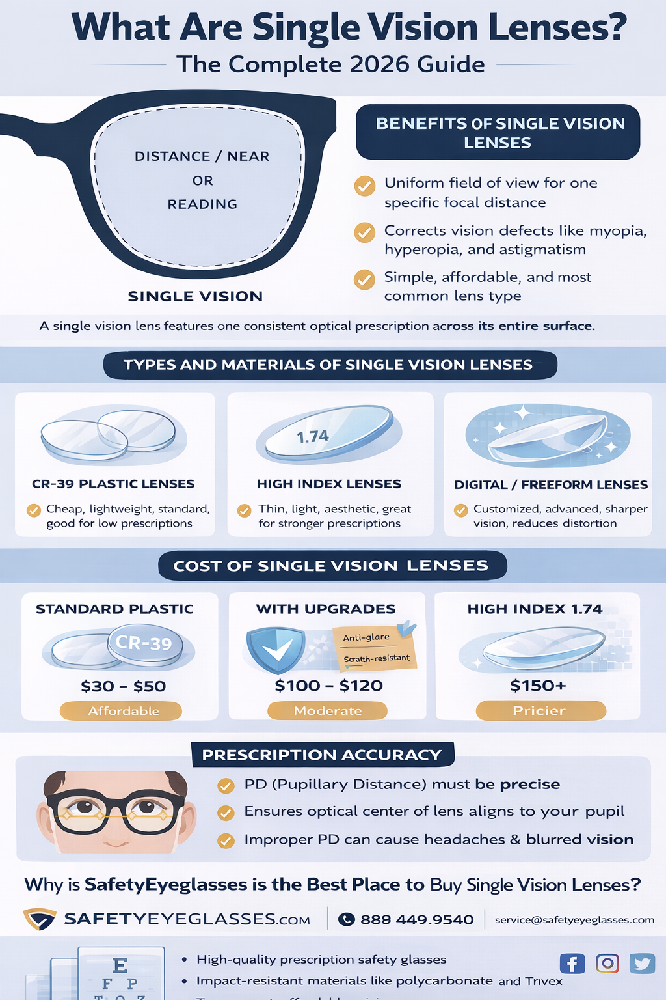
Understanding your eyewear is the initial step to a clear vision and ocular health in the long run. A single vision lens is an optical tool that features one consistent optical prescription across its entire surface.
This type of lens is the most popular choice for single vision users worldwide. It makes up the great majority of eyewear produced today. A single vision lens provides a uniform field of view without any abrupt changes in magnification or power.
Single vision glasses mean a pair of glasses that correct one specific focal distance. These are the most common spectacles used in the world today. They correct typical vision defects such as myopia (short-sightedness), hyperopia (long-sightedness), or astigmatism.
In contrast to multifocal or bifocal, they do not have separate segments or distance corridors. They concentrate light to one point on the retina so that the image you are focusing on is clear and sharp.
A single vision prescription will typically include values in the Sphere and Cylinder columns. However, a key identifier of this prescription type is that it will lack any "ADD" power. This indicates you only need correction for one specific range of sight.
Types and Materials of Single Vision Lenses
Single vision lenses come in numerous varieties in the contemporary market, and the technology of these has improved a lot. Depending on your specific prescription strength, your lifestyle, and the physical demands of your environment, the material may vary.
Single-vision plastic lenses are the simplest and oldest of the options. These are constructed normally out of a polymer, CR-39. They are inexpensive, lightweight, and have great optical clarity for general use. However, they can become quite thick and heavy if your prescription is high.
For those with stronger prescriptions, high-index materials are a revolutionary advancement. You might have seen single vision high index 1.74 lenses reviews praising their incredible thinness and aesthetic appeal. These lenses are up to 50% thinner than standard plastic lenses.
They effectively eliminate the "coke-bottle" look that was once unavoidable for people with high myopia. Single vision lenses also reduce the overall weight of your glasses significantly, preventing the frames from sliding down your nose.
Modern technology also offers customised single vision lenses. These are often marketed as "Digital" or "Freeform" lenses. Traditional lenses are cut using a standardized mold. But customized lenses are carved using a computer-guided diamond point that maps thousands of points across the lens surface. This process accounts for how the frame sits on your unique face and the tilt of the lenses.
It provides high-definition viewing and greatly reduces peripheral distortion. Those who need keen vision from all angles, like sports gamers and industrial experts, will find this especially helpful. The proper material is essential for long-term happiness and visual comfort when it comes to single-vision lenses.
Single Vision Lenses Cost and Pricing
The single vision lenses price guide will be useful when planning a purchase of new eyewear. Optical industry prices differ depending on the lens material, the brand, and any other protective coatings. The most affordable point of entry is standard plastic lenses. However, high-index materials, specialized safety polymers, or advanced digital surfacing will naturally cost more. In 2026, the lens type single vision market is highly competitive, and there are numerous levels of pricing.
Average cost of single vision lenses
Even a simple set of generic lenses can begin as cheap as $30 to $50 at budget stores. However, with the necessary upgrades such as anti-reflective surfaces, scratch-resistance, or blue-light filters, the price can increase to $100 or 120.
When you need the ultra-thin 1.74 high-index technology, you can count up to $150 or above per pair. Consumers should consider value vs. performance. Today, a cheap, generic lens could save you. However, it can scratch easily or cause distracting glare during driving at night.
High-quality single vision glasses usually offer better coatings that prolong the eyewear's life. Moreover, a personalized digital lens can greatly alleviate eye pressure when working long hours on the computer or performing other fine tasks.
Prescription Accuracy and Fitting Considerations
Optical precision is the most important factor in any lens purchase. A common question from online shoppers is: Does PD matter for single vision lenses? PD Pupillary Distance is the precise distance between the centers of your pupils. To work properly, the lens must place the optical center of its lens directly before your pupil.
When the PD is incorrect, the light will not correctly focus on your retina, and that may cause a headache, nausea, or blurred vision. Minor mistakes of millimetres can lead to a lot of eye strain. When we enter our 40s, do we require progressive lenses or single vision?
This decision depends heavily on your daily tasks and visual lifestyle. If you only struggle to see things far away, distance single vision is the perfect choice. However, when you are always shifting your glasses up and down to view your dashboard or phone, you could be developing presbyopia.
The difference between Single vision and progressive lenses is how many focal points are incorporated into the glass. Single vision is a lens with one power. Progressives have three smooth zones: distance, intermediate, and near. While progressives offer the convenience of an "all-in-one" solution, they take more time for the brain to adapt to.
Why is SafetyEyeglasses the Best Place to Buy Single Vision Lenses?
Your eyes are the most important part, and they deserve the best protection. SafetyEyeglasses is the number one supplier of quality prescription safety glasses. Our lenses are made of high-impact materials such as polycarbonate and Trivex, which are virtually shatterproof.
We provide an array of lens choices to fit any potential consideration. We also provide specialized coatings that go beyond the basics. Our anti-fog and scratch-resistant treatments are specifically engineered for industrial environments where visibility is a matter of safety.
You do not need to decide between your wallet and your eye health. We have a transparent pricing system that shows you exactly what you are paying, and no hidden costs for key safety features.
Moreover, we are an experienced provider of workplace vision solutions. Every day, thousands of professionals, starting with construction foremen and going down to laboratory technicians, depend on us.
We know the necessities of various industries and can guide you in the intricacies of your prescription. Our specialists will be ready to assist you in knowing the type of lens you need, single vision, and to make sure your glasses fit your face perfectly.
See What's New
Get an exclusive first look at our latest promotions and collections!

50% OFF on Safety Frames
When Lenses Are Purchased. Enter your email to unlock this exclusive safety eyewear deal.


Leave your comment