


*Exclusions apply. By subscribing, I confirm that I am 18 years of age or older and agree that my personal information may be used by SafetyEyeglasses.com to send me news, special offers, and other marketing communications. For more details, please review our Terms & Conditions and Privacy Policy. You may unsubscribe at any time.
- Safety Glasses
Collection
Feature
Shop By
Blog
What Are Night Driving Glasses?
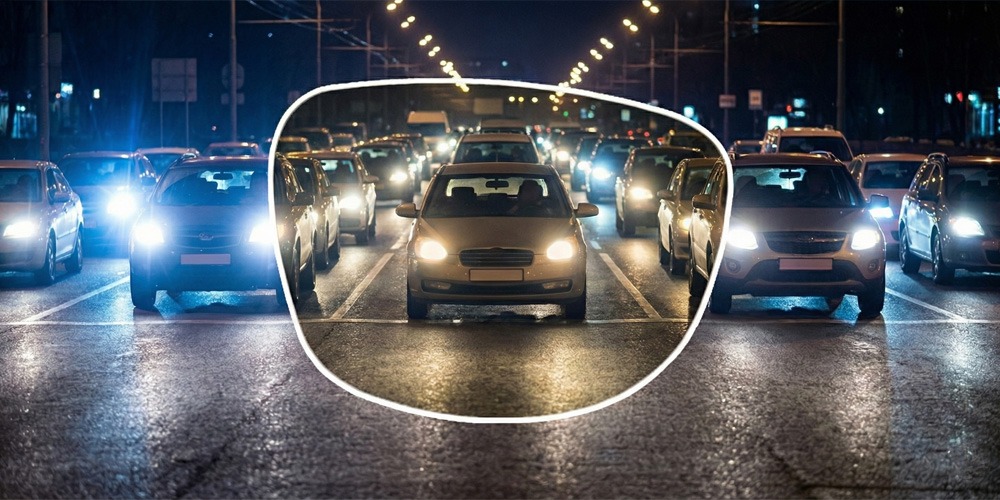
Night driving is a totally different world from daytime driving. Have you ever felt as blind as being under the high beams of an oncoming truck? Or may you not find it easy to see the edge of the road when it rains. You are not alone in this fight. The dark road seems to bother and frighten many people. This is the reason why night driving glasses have become such a hot issue in the recent past.
The purpose of these glasses is to improve your vision after dusk. Despite having unique lens tints or coatings, they frequently resemble ordinary eyewear. The aim is easy: to simplify the road and decrease that irritating glare of LED headlights.
The brighter our cars are, the more difficult it becomes to adjust our eyes. This increasing popularity is a result of one of the fundamental human needs to have a sense of safety behind the wheel. We also desire to arrive at our destination without straining our eyes.
Are There Glasses Specifically for Night Driving?
Night driving glasses are not just a marketing idea. There are actual designs made for low-light use. Let us look into what makes them different and useful.
Of course, we have glasses that are designed to be used in night driving. They are anti-glare glasses, lenses of yellow color and certain prescription options. They are made to minimize the glare and enhance visual comfort.
The best night vision glasses for driving are now available in many brands, but with varying results. The key is choosing the right type for your eyes.
Types of Glasses Designed for Low-Light Conditions
The market today has a few key types. Anti-glare glasses are the simplest and most generally recommended. The use of yellow-tinted lenses is also common to enhance contrast.
Others wear prescription safety glasses which have a special coating to help them see at night. They all have slightly different purposes based on what you need.
Key Features That Distinguish Night Driving Glasses
Night driving glasses frequently have anti-reflective coatings. The headlight and streetlight glare is reduced by these treatments. Most are also light yellow in colour, to enhance contrast.
They are generally light in weight and made to be comfortable when travelling long distances. Unlike the safety sunglasses, they do not completely block out the light. Rather, they are trying to find the balance between brightness and clarity.
What Are the Night Driving Glasses?
To know how the night driving glasses work, one needs to look beyond the marketing aspect and into the actual physics of light. While they may look like standard eyewear, these specialized tools are designed to manage the chaotic visual environment of the road after sunset. By changing the way light waves enter your eyes.
These glasses aim to lessen the "noise" of modern traffic while increasing the "signal" of the road itself. The effectiveness of these glasses generally comes down to two main components: lens coatings and color science. This is the breakdown of how they work to enhance your sight:
Anti-Reflective (AR) Coatings: The most crucial feature is the anti-glare coating. More light may flow through the lens rather than reflect off the surface due to its minuscule thinness. It can also be used to remove the effect of a halo or a starburst (around the streetlamps and oncoming traffic) that is caused by internal reflections.
The Role of Yellow Tints: Most night glasses for driving have a light yellow or amber hue. The color yellow is selected due to the longer wavelength, which is more relaxing to the eye in low-light scenarios.
Filtering Scattered Light: Yellow lenses operate by filtering out high-energy, short-wavelength blue light. The haze or veiling glare that causes objects at night to appear blurred or washed out is often caused by this blue light.
Contrast Enhancement: By filtering that dispersed blue light, the glasses naturally enhance contrast. This helps you stay in your lane with less effort by making the white and yellow lines on the pavement appear much crisper against the dark asphalt.
Light Balancing: These glasses do not actually make you have the ability to see in the dark, but in effect, they do just that.
Basically, these glasses are a filter that purifies your visual image. They also enable your eyes to rest and concentrate on what really counts: arriving at your destination safely.
Do Night Driving Glasses Really Work?
The question of whether night driving glasses actually deliver on their promises. It is a topic of much debate among drivers and vision experts alike. Although marketing campaigns tend to present them as a magic bullet on the dark roads, the actual situation is more complex. In order to see whether they do work, we should see the difference between laboratory data and the sense of comfort.
It is important to differentiate between clinical efficacy and personal preference while evaluating these glasses' efficacy. Drivers wearing tinted night vision glasses do not identify pedestrians or traffic signals any faster than those wearing clear lenses, according to the majority of independent tests. In fact, because tints block a small percentage of light. Some researchers argue they could technically reduce overall visibility in extremely dark areas.
Despite what the labs say, many drivers report a significant improvement in "visual comfort". Users often feel that the best night vision glasses for driving take the "sting" out of harsh LED beams, reducing the immediate physical flinch or squinting that causes eye fatigue during long hauls.
Situations Where They Help
These glasses are most effective in urban environments where there is a constant barrage of streetlights and oncoming traffic. Yellow lenses' contrast-enhancing characteristics can also provide a psychological boost in foggy or misty situations, making the environment appear "sharper".
Where They Fall Short
They are generally not recommended for driving on pitch-black rural roads with no external lighting. In such situations, your eyes require all the available light, and maybe even a light tint will backfire. Indeed, they will not provide you with a superhuman vision, but that is the point; they will eliminate the stress and strain of glare. For many, the ability to arrive at a destination without a "light-induced" headache is proof enough that they have a place in the glovebox.
Types of Glasses That Help with Night Driving
When the sun goes down, the visual demands of the road change instantly. Nor is every pair of glasses constructed to withstand the glare of modern LED headlights. Which tool to apply to the job requires you to consider your visual needs and the responsiveness of your eyes in low-light situations. There are three main technologies often marketed as night driving glasses. Each provides a different method of reducing the "noise" of the road so you can remain comfortable and focused while commuting.
Yellow-Tinted Glasses

The question that many people ask themselves is, " Do yellow glasses assist in night driving? They are possibly the most familiar type of night time driving glasses. High-energy blue light, which is the portion of the spectrum that produces the most "haze" or scattered light in the dark, is filtered out by them.
By blocking blue light, yellow lenses significantly boost contrast. This improves visibility of lane signs and road outlines, especially in cloudy or rainy conditions.
The first con is that any tint will decrease the total number of light rays reaching your eye. To others, this may make the world a little too dark or to those especially sensitive to glare.
Anti-Glare Glasses
Assuming you prefer a clear view without a change in color, anti-glare lenses are usually thought to be the best night driving glasses to have pure sight.
The lenses have an anti-reflective (AR) coating that enables more light to pass through the lens rather than bouncing off the surface.
The coatings prevent the annoying starburst or halo effect around streetlights and oncoming high beams.
Blue Light Blocking Glasses
There is often a misconception that standard computer glasses are the same as night vision glasses for driving. While both block blue light, driving-specific lenses are optimized for distance rather than a screen.
When correctly rated for automotive use, these glasses can reduce the harshness of modern "cool-toned" headlights, making for a much more relaxed driving experience.
Safetyeyeglasses is the best place to find these special lenses, with high-technology coating and tough frames to match any activity.
Do Night Driving Glasses Work?
Would they be worth your hard-earned money? It is yes to many. The main "pro" is the reduction in eye strain. If you get headaches from night driving, these could be a lifesaver.
Pros and Cons
- Pro: Significant reduction in glare-induced discomfort.
- Pro: Higher visual contrast in low-light conditions.
- Con: Can provide a false sense of security.
- Con: Does not fix underlying vision issues like cataracts or astigmatism.
Who should consider them? They are excellent among the elderly drivers who have a more sensitive eye to glare. They also fit excellently with delivery drivers or individuals with extended night shifts.
What Glasses Are Good at Night Driving?
The difference between a stressful, glaring commute and a peaceful trip home could be made with the correct nighttime driving glasses. The best option is typically a combination of professional-grade finishes and a personalized fit, even though there are many generic options. This is not about trying to find a magic tint. But not so much about maximizing the way your eyes interpret the light they get in low-visibility situations.
Recommended Lens Features
To make the most of your nighttime eyewear, pay attention to the following key technical characteristics:
Anti-Reflective (AR) Coating
This is the most important feature of any night glasses for driving. High-quality AR coating will enable the passage of more light to the eye and virtually eliminate the distracting halo and starburst effects around streetlights and high beams.
Proper Prescription Lenses
A small, uncorrected vision error can create huge glare at night. The basis of nighttime safety is ensuring your glasses have an up-to-date prescription.
Minimal Yellow or Amber Tints to Contrast
A very light yellow or amber shade can be used to bring out the road lines on the pavement, especially on nights.
Polarization
Polarized lenses are normally worn during the day, but they can also be worn during the night. It also minimizes the puddle glare, especially when the roads are wet.
Safe Night Driving Tips
Identifying the best night driving glasses is a wonderful move toward visual comfort. These are just one component of an all-around safety plan. Nighttime safety means not just being reactive to the environment and your health. With a couple of simple steps to streamline your car and your own eyes, you can greatly minimize the dangers facing low-light travel. On-the-road measures to keep safe.
- Adjusting the side and rearview mirrors is one of the most popular methods for reducing glare. Some of the glare can be lessened by utilizing the night tab on your rearview mirror or by tilting your mirrors slightly out of your line of sight.
- It is extremely dangerous to have a dirty windshield; even a thin film of dust or streaks on the inside of the glass can reflect the light and cause a huge blur of glare.
- Make sure your headlights are directed correctly so they illuminate the road without blinding other drivers, and that there is no oxidation or fogging on the plastic covers.
- As we get older, our vision gradually deteriorates, making it difficult to detect minor changes in night vision. A professional eye examination can detect even minor astigmatism or prescription changes that may be making your nightly commute more difficult than it should be.
It is a matter of preparation to stay safe at night. By taking a clean car and the right set of mirrors and putting in a current prescription, you place yourself in the best possible position on the road.
Where to Buy Quality Night Driving and Safety Glasses
Where you buy your gear matters just as much as what you buy. You would like a retailer that knows technical standards. When you are purchasing lenses, you really know you are getting lenses that are actually tested to be safe and clear. You do not desire a toy when your life is on the line.
Safetyeyeglasses is a fantastic place to start your search. They offer a massive range of high-quality safety glasses that go way beyond the basics. Whether you need protection for industrial work, sports like pickleball, or a long drive home, they have a solution.
Their products combine durability with advanced lens technology. This implies that you get the visual clarity that you need to see the road and the protection that you need in your active life. They are an ideal solution for anyone who will not be satisfied with good enough when it comes to their eyes.
See What's New
Get an exclusive first look at our latest promotions and collections!

50% OFF on Safety Frames
When Lenses Are Purchased. Enter your email to unlock this exclusive safety eyewear deal.


Leave your comment