




*Exclusions apply. By subscribing, I confirm that I am 18 years of age or older and agree that my personal information may be used by SafetyEyeglasses.com to send me news, special offers, and other marketing communications. For more details, please review our Terms & Conditions and Privacy Policy. You may unsubscribe at any time.
- Safety Glasses
Collection
Feature
Shop By
Blog
How to Choose Sunglasses to Protect Eyes
For most of us, sunglasses are a simple fashion accessory. We pick up a pair that is attractive on our face. But your eyes need proper protection from daily outdoor conditions.
Harmful ultraviolet rays are constantly produced by the sun. The eyes may suffer long-term damage from this radiation over time. Lenses with a dark tint are insufficient to protect your eyesight.
In fact, the wrong glasses can cause eye damage. Finding the right pair is an important decision for your eye health. Your eyes deserve the best protection available today.
Let's find out how to select the best sunglasses and what actually protects your eyes from the sun.
How to Get the Sunglasses for the Best Eye Protection
Understanding the risks caused by sunlight is necessary while choosing eye protection. Protection should always come before style. Here is how to evaluate your eye protection needs.
Understand Your Eye Protection Needs First
Our eyes may be impacted by the harmful UV rays. You must therefore get quality eye protection sunglasses to safeguard your eyes daily.
Think about your typical daily environments and routines.
- Do you work outdoors under harsh, direct sun?
- Do you spend hours driving on highly reflective roads?
Understanding your daily routine helps you identify the correct features.
Look for Complete UV Protection
Check the UV protection of the lens at all times. Proper sunglasses for UV protection block both UVA and UVB rays. Do not assume dark lenses automatically block harmful light. In fact, dark lenses without filters can be harmful. They increase the amount of light that can enter your eyes by causing your pupils to widen. Before purchasing, look up the manufacturer's rating.
Select sunglasses with UV400 protection
Buying certified UV400 sunglasses is the finest option. This coverage protects from 100% of harmful UVA and UVB radiation. It's the highest level of UV protection you can get. Check for a clear, verified UV400 label on the product frame. This simple label ensures your eyes stay protected all day.
What to Consider Before Purchasing Sunglasses
Smart buyers look past style to inspect important features. You must consider the lens features of the glasses. Here is what to inspect before making a purchase.
Check the Lens Protection Features
Start by reviewing the quality of the lens material. High-quality lens materials should offer absolute optical clarity without distortion. Hold the glasses at arm's length to inspect them.
Look through the lens at a straight reference line. Move the glasses slowly across your field of view. If the straight line bends, the lens has distortion. Choose lenses that maintain perfect, straight lines at all angles.
UV Protection Rating
Advanced UV protection sunglasses must clearly display their rating. Seek out certified verification from reliable testing centers. Avoid buying cheap products with insufficient, unverified safety guarantees.
Excellent UV protection is a chemical treatment applied to the lens. It does not depend on the color or darkness of the glass. Clear lenses can provide 100% UV protection.
Polarized Lenses
Many outdoor enthusiasts like to wear polarized sunglasses on bright days. A unique filter is a feature of these special lenses. This filter blocks intense, reflected glare. Polarization lessens glare from shiny, flat surfaces. It is quite helpful for glare from roads, water, or snow.
Polarized vs UV Protection
It is vital to understand polarized vs UV protection differences. They are completely separate technologies serving different optical purposes.
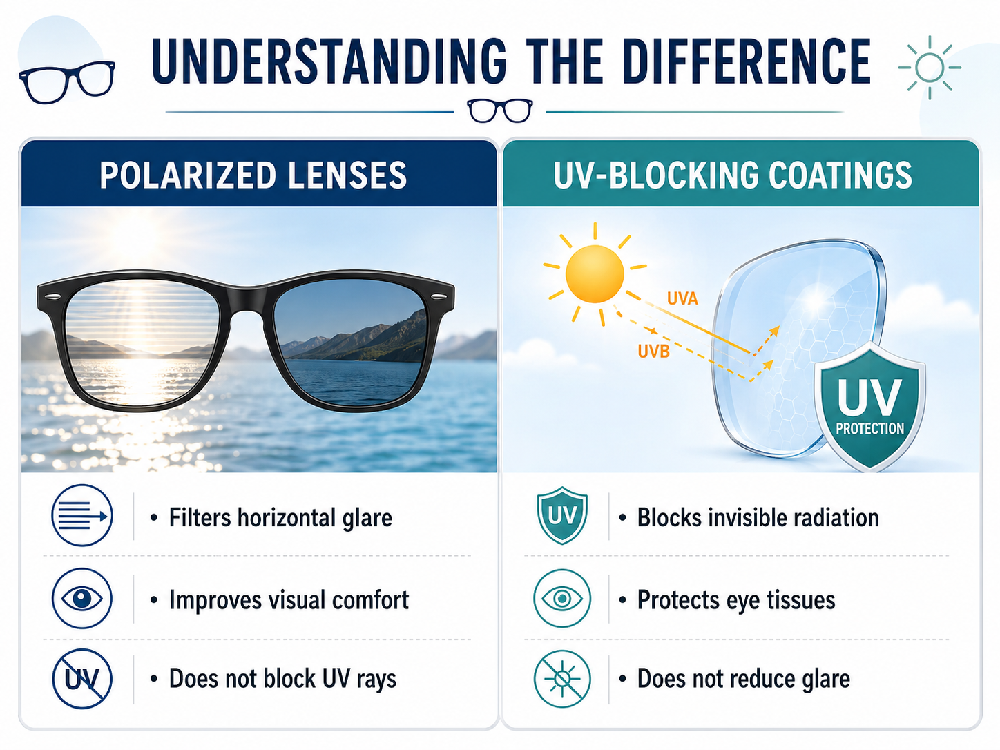
Polarization filters bright glare to improve your immediate visual comfort. In the meantime, UV coatings shield your eyes from dangerous invisible rays.
Understanding Different Types of Sunglasses
The modern eyewear market offers several specialized designs for consumers. Each style addresses a different optical or lifestyle need. Let us look at the four main categories.
Traditional Sunglasses
Traditional sunglasses offer basic shading from bright overhead light conditions. But they don't usually have specialized high-impact safety ratings or polarization. These are suitable for short distances. Just make sure they still offer verified, complete UV protection.
Polarized Sunglasses
The purpose of the best polarized sunglasses is to regulate intense reflected light. In bright settings, they enhance color contrast and depth perception. Sports enthusiasts and outdoor workers love them. They are perfect for environments with high, constant visual glare.
Prescription Sunglasses
For people who wear corrective lenses, prescription sunglasses are truly convenient. They combine your precise vision correction with premium sun protection.
This option eliminates the need to wear uncomfortable double-layer glasses. You can enjoy outdoor activities with clear vision and comfort. They are custom-built to match your unique vision needs.
Sports Sunglasses
Sports glasses are designed to stay in place when you move quickly. The frames have rubber nose pads and are made of a lightweight, durable material. They protect your eyes from flying debris, dust, and wind.
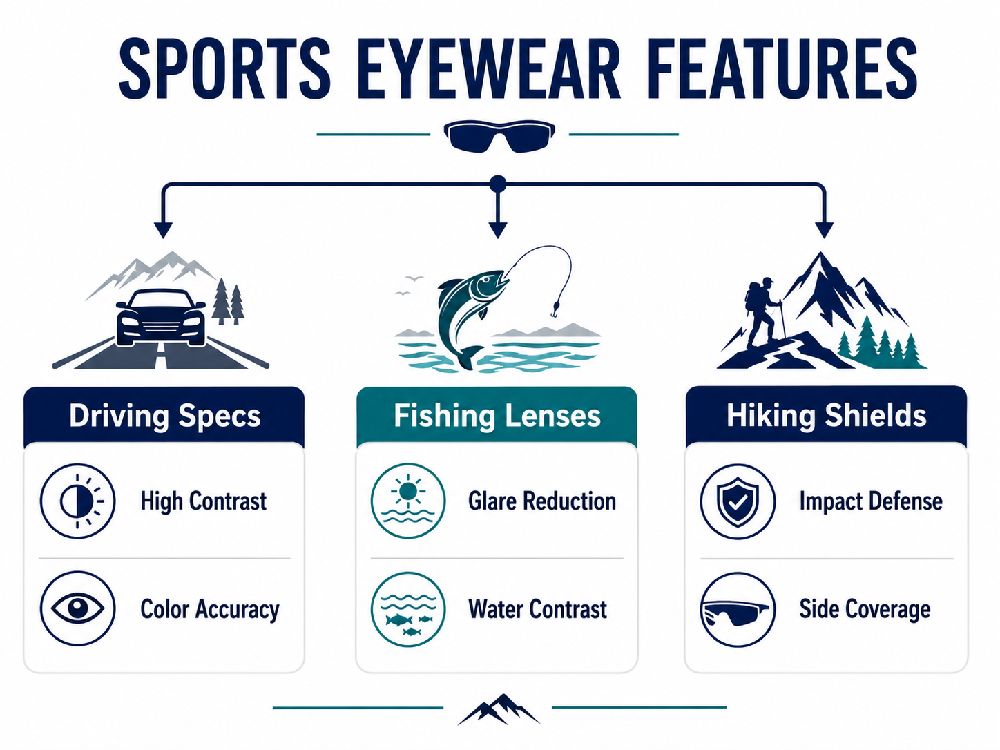
Sunglasses for Driving: Sunglasses for driving require moderate tinting that does not alter traffic light colors. They shade the bright sky while keeping your dashboard clearly visible.
Sunglasses for Fishing: Sunglasses that let you see into the water are ideal for fishing. Copper or polarized amber sunglasses are ideal for fishing. They block water glare and highlight moving fish with ease.
Sunglasses for hiking: Sunglasses for hiking are crucial because mountain trails are always changing in terms of light and physical hazards. They protect from dust, low branches, and unexpected exposure to UV light at high altitudes.
Sunglasses Lens Guide: Materials and Colors
Selecting the right lens material and tint color is critical. This sunglasses lens guide explains how these factors affect your performance.
Selecting the Right Material
The weight, clarity and impact resistance depend on your lens material.
- Polycarbonate is extremely impact resistant, lightweight, and ideal for active sports.
- Optical Glass is scratch-resistant and absolutely clear. But it is heavier and can break on a strong physical blow.
- CR-39 Acrylic is a lightweight and affordable plastic with good everyday optical properties.
Functional Lens Color Guide
Different tint colors alter how your eyes perceive contrast and colors.
Lens Color | Optimal Lighting Conditions | Best Use Cases |
Gray & Green | Bright, direct daylight | All-purpose wear, driving, and cycling |
Amber & Brown | Variable, overcast, or hazy light | Fishing, golfing, and high-contrast sports |
Yellow & Gold | Low-light, flat light, or foggy days | Skiing, hunting, and early-morning driving |
Select a lens colour with respect to your main outdoor settings.
Sunglasses Frame Guide: Finding the Right Fit
The frame holds your lenses in the correct position. This sunglasses frame guide explains how to choose the right fit.
Why Frame Selection Matters
A poorly fitting frame can cause continuous slipping and pressure headaches. It can also allow harmful sunlight to enter from the sides. Your frame must sit comfortably and securely on your face.
Choose Frames That Block Side Exposure
Standard flat frames allow up to 20% of UV rays to leak in from the sides. To prevent this, choose wrap-around styles or thick temple arms. These protective designs block peripheral light from reaching your eyes. They are highly recommended for high-glare environments like beaches.
Frame Materials to Consider
Search for materials that are tough and flexible enough to withstand accidental impact.
- Nylon is highly flexible, heat-resistant, and ideal for athletic performance frames.
- Acetate is a lightweight, plant-based plastic with rich, deep color designs.
- Titanium is highly corrosion-resistant, incredibly strong, and extremely light for everyday use.
What Are the Best Sunglasses for Different Needs?
Each face shape has very specific frame requirements. Let's look at the way of finding a compatible good fit. The best sunglasses for eye protection are those that filter at least 95% of UV radiation for the best eye protection.
Impact-rated frames and 100% UV400 filters are features of the best eye protection sunglasses. Verify the safety ratings in ANSI Z87.1.
These are the tough models that can shield your eyes from physical damage and UV rays. They are the standard for high-risk, outdoor working areas.
Best Sunglasses for Men
The best sunglasses for men typically feature structured, wider geometric frame shapes. Square frames, sporty wrap-around shapes, and traditional aviators are popular designs. Ensure the frame width matches your natural face width perfectly.
Best Sunglasses for Women
Cat-eye or large sunglasses are the ideal choice for women. The larger sizes offer superior coverage for the sensitive part of the eyelid.
Sunspots and premature wrinkles can be avoided with this extra coverage. Select lightweight materials that won't cause your nose bridge to pinch.
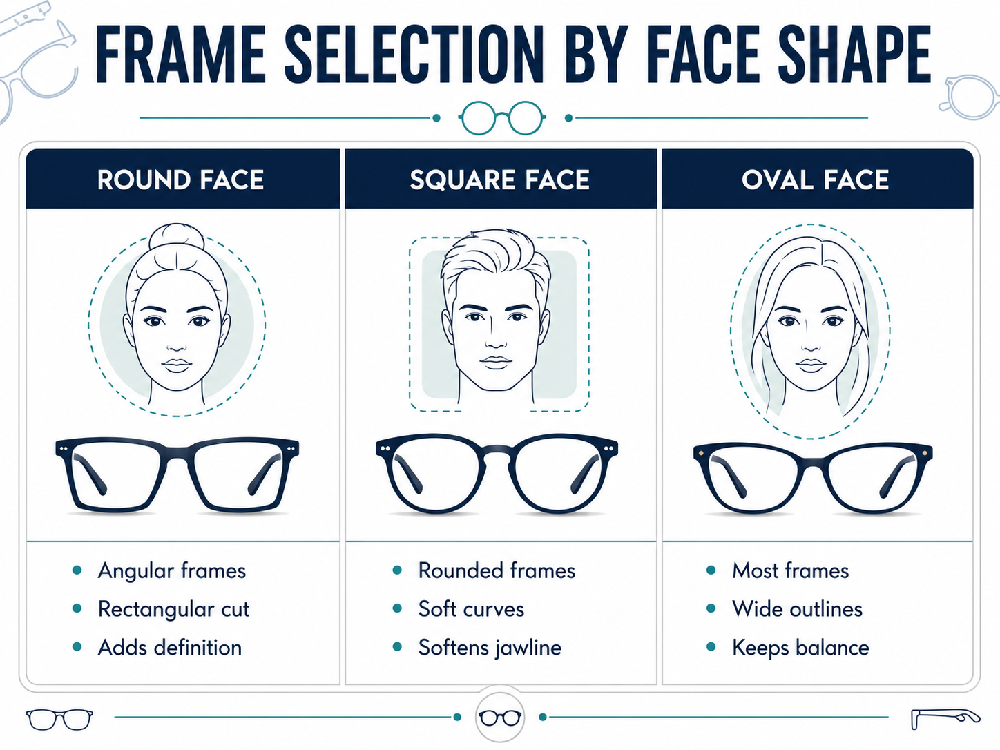
Choosing Sunglasses That Fit Your Face Shape
You will look better if the frame's style matches the shape of your face.
Are Sunglasses Bad for Your Eyes? (Understanding Common Concerns)
Sunglasses can damage your vision, according to several common myths online. Let's disprove these myths with scientific proof.
Your vision is not affected by high-quality sunglasses. Long-term eye damage and eye fatigue can be prevented with protective lenses.
The true risk is the wearing of low-priced, unrated fashion glasses. These cheap products often use dark plastic lenses without proper UV filters.
As discussed, the dark tint tricks your pupils into opening wide. The lens does not feature a UV filter, so it lets in a massive amount of radiation.
Over time, this exposure may lead to faster cataract growth and retinal damage. Never wear unrated glasses purchased at discount stores.
How to Protect Eyes from UV Rays Beyond Sunglasses
Good eye care requires a combination of good habits and protective gear. You must protect your vision using multiple layers of defense.
Use this simple sunglasses buying guide for maximum safety:
- Wear a Wide-Brimmed Hat
- Find shade during the hottest times of day.
- Use Protective Lenses on Cloudy Days
- Wear Specialized UV Protection Sunglasses
Standard sunglasses and glasses are not designed to be impact-resistant. Look for safety sunglasses of industrial quality with genuine ANSI Z87.1 safety stamps. These are frequently robust types designed to endure flying debris at high speeds.
Choosing Sunglasses to Fit Your Lifestyle
When choosing a pair, think about your main outside locations. For a daily walk, if you like natural hues, use a gray polarized lens. These glasses let you see what's happening on your dashboard while keeping out the sun.
- Wear dark, mirrored blue or green polarized lenses for beach activities. These block massive glare from the sand and water surface.
- Amber or brown lenses with high contrast and durable frames. These are useful when viewing the trail roots, rocks, and uneven terrain.
- Use green-mirror or copper polarized lenses to reduce glare from the water. These allow you to see fish moving below the surface with ease.
Professional Safety Eyewear Solutions at SafetyEyeGlasses
Standard glasses may not be enough for people who require maximum protection. You need professional-grade, certified eyewear to stay safe.
Choose Safetyeyeglasses if you work in heavy manufacturing, utilities, or construction because we combine occupational impact protection with great vision.
Our quality safety sunglasses meet ANSI-certified safety standards. You get reliable safety alongside advanced, complete UV protection.
Our industrial sunglasses are made especially to endure harsh work settings. They maintain sharp eyesight in damp circumstances since they are anti-fog and scratch-resistant.
We also provide prescription lenses that are custom-made right into heavy-duty safety frames. Select a trusted safety eyewear provider to ensure eye safety on the job.
Shop for impact-rated, protective safety eyewear today. Purchase the best eye protection to prevent eyestrain and protect your eyes throughout your shift.
FAQ’s
Can Sunglasses Expire?
Yes, sunglasses can lose effectiveness over time as UV coatings and lens materials degrade.
Should You Wear Sunglasses Indoors?
Generally, you shouldn’t wear sunglasses indoors unless you are exposed to bright artificial light, have specific medical conditions, or strain your eyes.
Do Darker Lenses Offer More Protection?
No, darker lenses do not offer UV protection because the UV-blocking filter is completely transparent; always check for proper UV-blocking certification.
Can Blue Light Sunglasses Replace UV Protection?
No, blue light lenses are designed for screen-related light exposure and do not replace UV protection.
How Often Should You Replace Sunglasses?
Replace your sunglasses every two years or when lenses are scratched, damaged, coatings wear out, or they no longer provide reliable protection.
See What's New
Get an exclusive first look at our latest promotions and collections!

50% OFF on Safety Frames
When Lenses Are Purchased. Enter your email to unlock this exclusive safety eyewear deal.


Leave your comment