


*Exclusions apply. By subscribing, I confirm that I am 18 years of age or older and agree that my personal information may be used by SafetyEyeglasses.com to send me news, special offers, and other marketing communications. For more details, please review our Terms & Conditions and Privacy Policy. You may unsubscribe at any time.
- Safety Glasses
Collection
Feature
Shop By
Blog
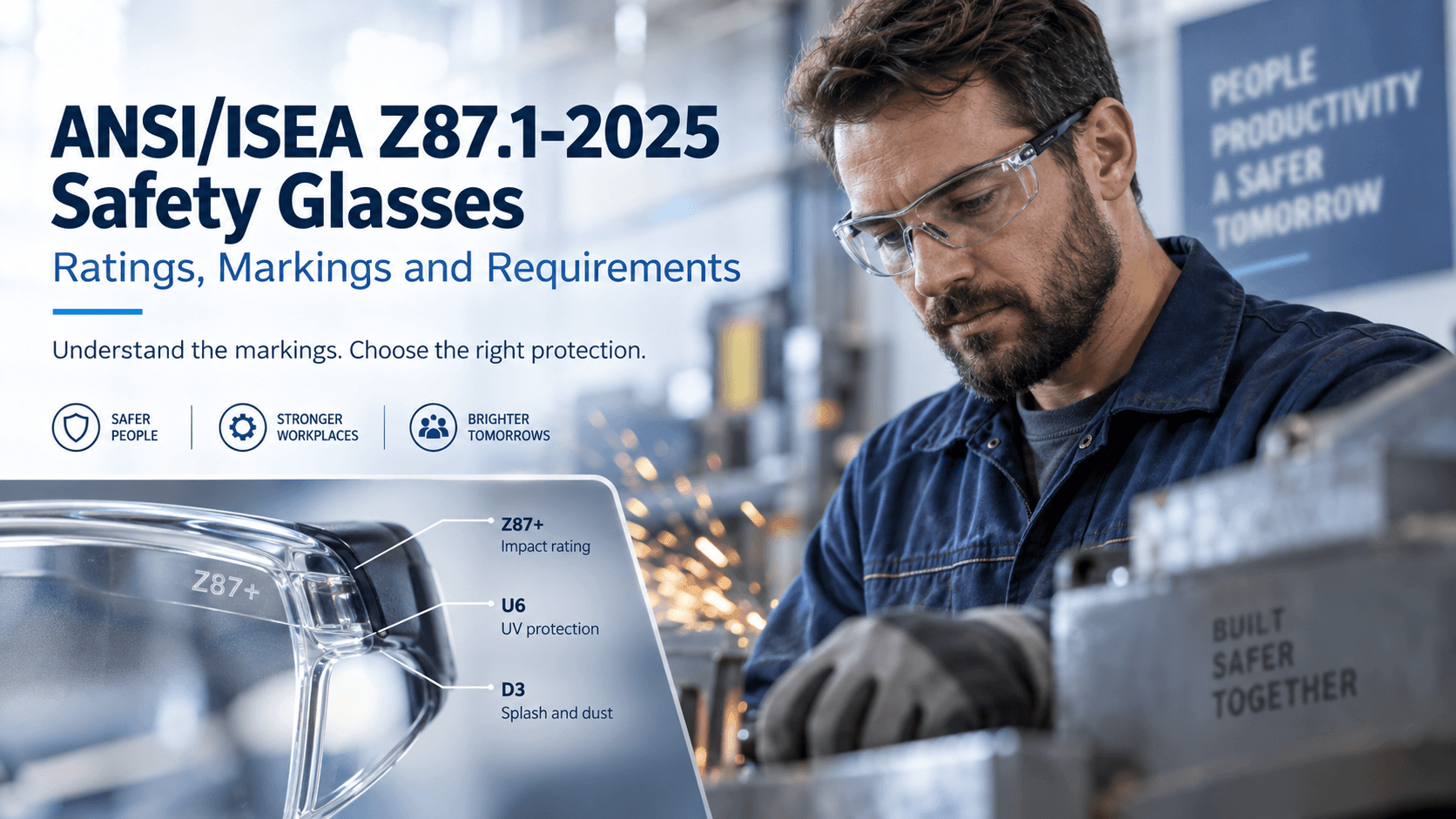
ANSI/ISEA Z87.1-2025 Safety Glasses: Ratings, Markings and Requirements
Eye protection in high-risk workplaces depends on properly selected, tested, and maintained PPE. Everyday workplaces put workers at risk from high‑impact debris, fine dust and chemical spills. The latest version of the occupational and educational eye and face protection standard, ANSI/ISEA Z87.1-2025, changes and sets the rules for testing, labels, choosing, maintenance and how to use the equipment. Understanding rating systems helps buyers select certified equipment tailored to specific site hazards. This detailed guide looks into markings, testing processes, and compliance criteria.
What Is ANSI Z87.1?
For occupational eye protection equipment, uniform national performance standards are established by the ANSI Z87.1 standard. Developed jointly by safety experts, it defines critical structural expectations across industrial applications.
ANSI Z87.1 Standard Explained
This technical standard outlines strict testing protocols for lenses and structural frame assemblies. Testing assesses non-ionizing radiation absorption capacity, chemical resistance, optical clarity, and physical durability.
What Does ANSI/ISEA Z87.1 Mean?
ANSI/ISEA Z87.1 is a performance standard that establishes requirements and test methods for occupational and educational eye and face protection. Products that conform to the applicable requirements are permanently marked according to the standard. The International Safety Equipment Association and the American National Standards Institute work together closely. Together, they release new standards that take into account contemporary material advancements and industrial risks. This exact designation indicates that your visual gear meets strict physical standards.
ANSI Safety Glasses Standards and Requirements
Selecting eye protection that meets applicable requirements can help reduce the risk of workplace eye injuries.
ANSI Z87 Safety Glasses Requirements
To pass certification, frames and protective lenses must withstand extreme mechanical testing. ANSI Z87 safety glasses requirements focus on impact resistance, coverage area, and optical purity. Eyewear that is not designed and tested for the relevant hazard may provide inadequate impact protection.
Safety Glasses Specifications to Know
Key performance indicators include clear visual transmittance, thermal endurance, and precise mechanical alignment. Protective frames must fit securely without creating uncomfortable pressure points during long shifts. Materials used must resist corrosion, everyday skin oil breakdown, and cleaning chemical damage.
ANSI Rating for Safety Glasses
Every certified product receives a designated ANSI rating for safety glasses based on performance. Specific ratings highlight whether gear resists basic impacts, high-velocity strikes, or chemical splashes. Inspecting these technical codes ensures your team receives appropriate gear for daily duties.
Requirement Type | Basic Evaluation Criteria | Key Benefit |
Optical Clarity | Zero noticeable distortion across the visual field | Prevents eye fatigue during long shifts |
Corrosion Resistance | Exposure to industrial cleaning solvents | Maintains frame structural stability |
Material Strength | Shatterproof polymer composition | Shields eyes from high-velocity impact |
Understanding Z87 and Z87+
Recognizing the distinction between standard impact resistance and high-impact rating is critical.
What Does Z87 Mean on Safety Glasses?
A Z87 marking designates protective eyewear that corresponds to the applicable requirements of ANSI/ISEA Z87.1. The "+" marking indicates that the protector meets the applicable high-impact criteria. Basic Z87.1 safety glasses work well for general dust protection and light assembly operations.
What Does Z87+ Mean?
The addition of a plus symbol indicates high-impact testing compliance across demanding environments. Products marked Z87+ withstand high-velocity impact testing involving fast-moving steel projectiles.
ANSI Z87.1+ and Z87+ Safety Glasses
Managers can better prepare staff working with hazardous power gear by being aware of ANSI Z87.1+ markings. Selecting ANSI Z87+ safety glasses minimizes severe traumatic eye injury risks on dynamic job sites.
ANSI Z87.1 Safety Glasses: Ratings and Markings
Clear visual markings allow rapid verification of protective capabilities directly on active worksites.
How ANSI Z87.1 Safety Glasses Are Marked
Manufacturers apply exact, permanently molded codes to the corners of the outer lens and frame temples. These technical codes specify impact capability, lens tinting, splash protection, and dust defense. Proper identification ensures safety supervisors can verify workplace compliance during routine safety checks.
Z87.1 Safety Glasses vs. Standard Eyewear
Everyday fashion glasses lack the structural reinforcement required to resist sudden heavy impacts. Standard buyer frames frequently shatter, driving dangerous frame fragments directly into the wearer's eyes. Certified safety glasses ANSI Z87.1 use high-grade shatterproof polycarbonate materials built for intense environments.
How to Read Safety Glasses Markings
Learning technical codes simplifies equipment selection across various specialized workplace roles.
- Z87: Baseline impact resistance for low-hazard environments.
- Z87+: Advanced high-impact resistance against fast-flying fragments.
- D3: Reliable splash and droplet protection against liquid hazards.
- D4: Dust protection against hazardous airborne particulate concentrations.
- D5 = fine dust
- W: Shade rating designating specialized welding flash protection levels.
ANSI Z87.1-2025 Requirements for Safety Eyewear
The revised 2025 criteria improve testing parameters to increase coverage and user comfort.
Impact Protection Requirements
Modern guidelines require rigorous testing using high-mass drop tests and high-velocity steel ball shots. These tests address common jobsite hazards, including snapping cables and flying metal chips. Equipment must remain intact without cracking, dislodging lenses, or breaking frame structural joints.
Basic vs. High-Velocity Impact Protection
Basic protection involves dropping a heavy steel ball onto lenses from fixed overhead distances. High-velocity testing fires small steel spheres at speeds exceeding 150 feet per second. High-impact ANSI Z87.1 safety glasses pass both tests without structural failure.
Coverage, Lens and Frame Requirements
Compliant frames must cover extended facial areas surrounding vulnerable optical structures completely. Lenses must provide pristine optical clarity, keeping light refraction well within strict safety limits. Frame components must fit snugly to prevent heavy movement during vigorous physical tasks.
Side Protection and Protective Features
Lateral coverage prevents flying debris from bypassing the main lenses from side angles easily. Integrated or permanent side shields maintain continuous physical defense across dynamic work environments.
ANSI Z87.1 Prescription Safety Glasses
Workers who require vision correction must wear certified protective gear that is specifically designed for their prescription.
Prescription Safety Glasses ANSI Z87.1 Requirements
Custom corrective lenses must meet identical impact standards required of non-prescription industrial lenses. Frames designed for corrective lenses incorporate deep lens retention grooves to prevent pop-outs. ANSI Z87.1 prescription safety glasses offer crystal-clear vision and physical safety.
How to Identify Compliant Prescription Safety Glasses
Certified prescription frames feature clear manufacturer trademarks alongside the required Z87.1 code stamp. Safety optical laboratories issue official compliance certificates verifying lens material and impact testing. Always inspect frame arms to ensure prescription safety gear matches mandatory worksite rules.
ANSI Z87.1 Safety Goggles and Protective Eyewear
Certain industrial hazards require total perimeter sealing around the eyes to prevent severe injury.
When to Use ANSI Z87.1 Safety Goggles
Use appropriately rated goggles when a hazard assessment indicates that greater eye enclosure is needed, such as for certain dust, liquid-splash or other hazards. Some chemical-splash goggles use a close-fitting gasket and indirect ventilation to provide appropriate protection against specific liquid hazards. Goggles provide essential defense during chemical mixing, bulk cement handling, and overhead drilling operations.
How ANSI-Approved Safety Goggles Are Identified
Look for molded D3 or D4 markings along the flexible goggle housing body. Certified ANSI-approved safety goggles feature indirect ventilation ports that block liquid entry while preventing fogging. Elastic headstraps must maintain firm tension to keep seals seated firmly against skin.
Safety Goggles vs. Z87.1 Safety Glasses
Standard safety glasses contain modest open spaces at the top, bottom, and side frame edges. While glasses resist direct hits, goggles enclose the eyes entirely to stop fine particles.
How to Identify Approved Safety Glasses
Verifying product authenticity protects your organization from purchasing dangerous, uncertified counterfeit safety products.
Approved Safety Glasses Can Be Identified By Their Markings
Certified gear has readable, transparent stamps that are immediately molded into lens corners and frame arms. Do not presume that the eyewear complies with ANSI/ISEA Z87.1 if necessary indications are absent or unreadable. Before depending on it for workplace safety, review the product information and documentation provided by the manufacturer. Make sure the protector has the features needed for the targeted hazard by looking at the manufacturer's product documentation and permanent markings.
What Makes Safety Glasses ANSI Z87.1 Certified?
Products gain ANSI Z87.1 certified status through independent third-party laboratory testing protocols. Testing labs evaluate physical durability, chemical resistance, optical quality, and flame resistance capabilities. Passing products earn the right to carry official certification marks on finished commercial packaging.
Are All Safety Glasses ANSI Rated?
Not all protective glasses available online satisfy strict ANSI standards for safety glasses. Cheap consumer sunglasses often claim safety features without passing standardized laboratory testing protocols. Purchasing verified Z87 safety glasses indicates proven physical performance during real jobsite emergencies.
What Do ANSI Z87.1 Safety Glasses Protect Against?
Certified protective eyewear helps keep people from a wide range of dangers that can happen in the workplace every day.
Certified Safety Glasses Protect Against Which Hazards?
- High-Impact Debris: Wood splinters, tools, flying metal shavings and masonry dust.
- Hazardous solvents, unpleasant chemical fumes and corrosive liquid splashes are examples of chemical risks.
- Optical radiation includes infrared heat, powerful welding arc flashes and harmful UV rays.
- Dust & Particulate: flying sand particles, fine concrete powder, and a lot of sawdust in the air.
Workplace Applications for Z87.1 Protective Eyewear
Industrial sectors rely on standard designs and customized safety glasses to protect daily worker operations. Specialized visual equipment is needed by construction teams, auto mechanics, metal fabricators, and chemical lab technicians. Matching specific frame features to job hazards ensures maximum physical protection across every shift.
Choosing the Right ANSI Z87.1 Eye Protection
Selecting appropriate protective eyewear requires evaluating unique workplace hazards, comfort preferences, and job duties.
Safety Glasses, Goggles or Prescription Eyewear?
Identify primary environmental threats before selecting frame styles for your active operational crew. Standard high-impact glasses suit general assembly, construction, and outdoor maintenance tasks exceptionally well. Choose sealed goggles for liquid chemical handling and custom prescription frames for workers who require vision correction.
What to Check Before Buying?
Always verify that frame marks adhere to the most recent ANSI Z87.1 standard. Make sure the frames fit snugly and don't slip or pinch your nose when moving quickly. For tough outdoor work settings, make sure lenses provide full UV protection and scratch-resistant coatings.
Environmental Hazard | Primary Risk Factor | Recommended Gear Rating |
Metal Grinding | Fast-flying steel fragments | Z87+ High-Impact Glasses |
Chemical Handling | Corrosive liquid splashes | Z87 D3 Sealed Safety Goggles |
Outdoor Utility | Solar glare and flying dust | Z87+ Tinted Safety Sunglasses |
Woodworking | Fine airborne sawdust | Z87 D4 Dust-Rated Eyewear |
Final words
Understanding the ANSI standard for safety glasses helps organizations maintain full site compliance. Always look for molded Z87.1 marks on frames and lenses to confirm genuine protection. For high-impact situations with moving machinery or flying power tool debris, go for gear rated Z87+.
See What's New
Get an exclusive first look at our latest promotions and collections!
More articles like this

50% OFF on Safety Frames
When Lenses Are Purchased. Enter your email to unlock this exclusive safety eyewear deal.


Leave your comment