




*Exclusions apply. By subscribing, I confirm that I am 18 years of age or older and agree that my personal information may be used by SafetyEyeglasses.com to send me news, special offers, and other marketing communications. For more details, please review our Terms & Conditions and Privacy Policy. You may unsubscribe at any time.
- Safety Glasses
Collection
Feature
Shop By
- eVouchers
Blog
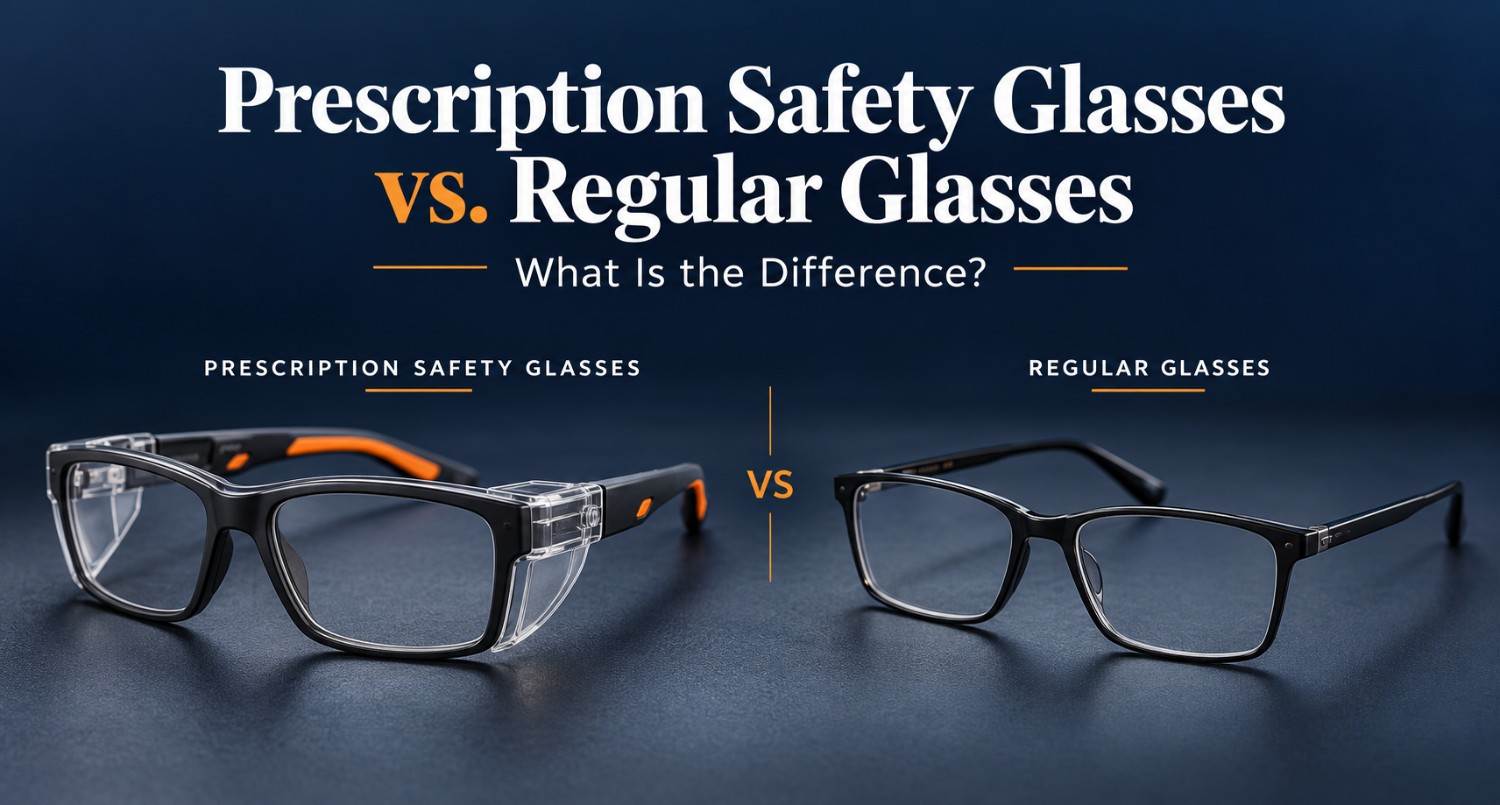
Prescription Safety Glasses vs. Regular Glasses: What Is the Difference?
Most people who wear glasses to work never consider whether their glasses genuinely protect their eyes.
- They just put them on.
- They correct vision.
- They sit on the face comfortably.
- They are familiar.
But when it comes to workplace eye protection, the differences between regular glasses and prescription safety glasses are significant. The key differences include impact resistance, frame design, side protection, and certification.
Choosing the right eyewear depends on the hazards present in your workplace and the protection those hazards require. This post explains the differences and what you need to know before buying eyewear for a hazardous work environment.
What Are Safety Glasses?
Safety glasses are protective eyewear used to shield the eyes from airborne particles, chemical spills, and dangerous radiation at work. Protective gear is made to specific standards, tested under specific conditions, and certified as authorised.
ANSI Z87.1 safety glasses undergo a series of tests to evaluate the materials, impact resistance, optical quality, and eye coverage. Compliant eyewear carries markings that identify the applicable standard and relevant protection ratings.
What Makes Safety Glasses Safe?
Three characteristics distinguish approved safety glasses from regular frames that may look similar.
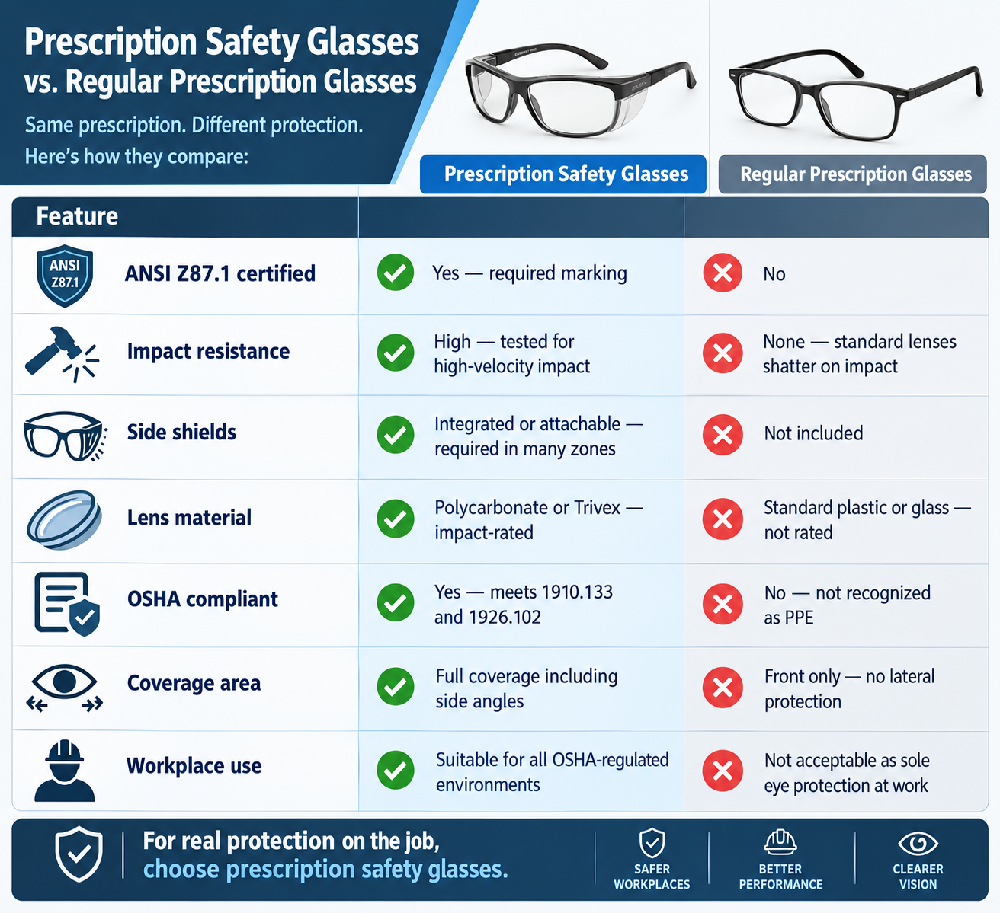
- First, consider the lens material. Safety lenses are made from polycarbonate, Trivex, and other impact-resistant materials. Standard plastic and glass lenses used in regular frames are not impact-rated and can fragment on contact.
- The second factor is coverage. Side shields or wraparound designs on safety glasses can help protect the eyes from hazards approaching from the sides. Regular glasses protect only the area directly in front of the eye. Hazards almost always come from angles as well as head-on.
- The third factor is marking. Certified safety eyewear carries the markings required for its type and level of protection.
Prescription Safety Glasses vs. Regular Glasses: The Key Differences
The comparison table below highlights the key differences. Every difference listed has a direct consequence for workplace eye protection.
Can Regular Glasses Be Used as Safety Glasses?
Generally, no, under OSHA eye protection requirements. Regular glasses do not qualify as personal protective equipment under OSHA's eye and face protection standards.
The materials used in regular frames are fundamentally different from those used in certified safety frames. Safety glasses with prescription lenses are built with polycarbonate lenses that absorb impact rather than fragment.
Do Prescription Glasses Meet ANSI Z87.1 Standards?
Standard prescription glasses purchased from an optometrist or optical retailer do not necessarily meet the ANSI/ISEA Z87.1 standard. Most standard prescription frames aren't impact-rated for industrial hazards and aren't approved as eye protection in the workplace by OSHA.
Do Safety Glasses Need Side Shields?
Particles and flying debris frequently come from above and to the side rather than directly in front. Safety glasses side shields help protect areas around the eyes that regular frames may leave exposed.
Prescription Safety Glasses vs. Regular Glasses for Workplace Protection
Eye and face protection requirements apply to any workplace where a recognized eye hazard exists. In workplaces with eye hazards, regular glasses alone may not satisfy an employer's requirements to provide appropriate protective eyewear. Prescription lenses can be used in safety glasses for workers who require vision correction.
Are Prescription Safety Glasses Required at Work?
Employers must provide appropriate eye protection. If a worker needs vision correction and the workplace has identified eye hazards, employers should offer protective eyewear with prescription lenses.
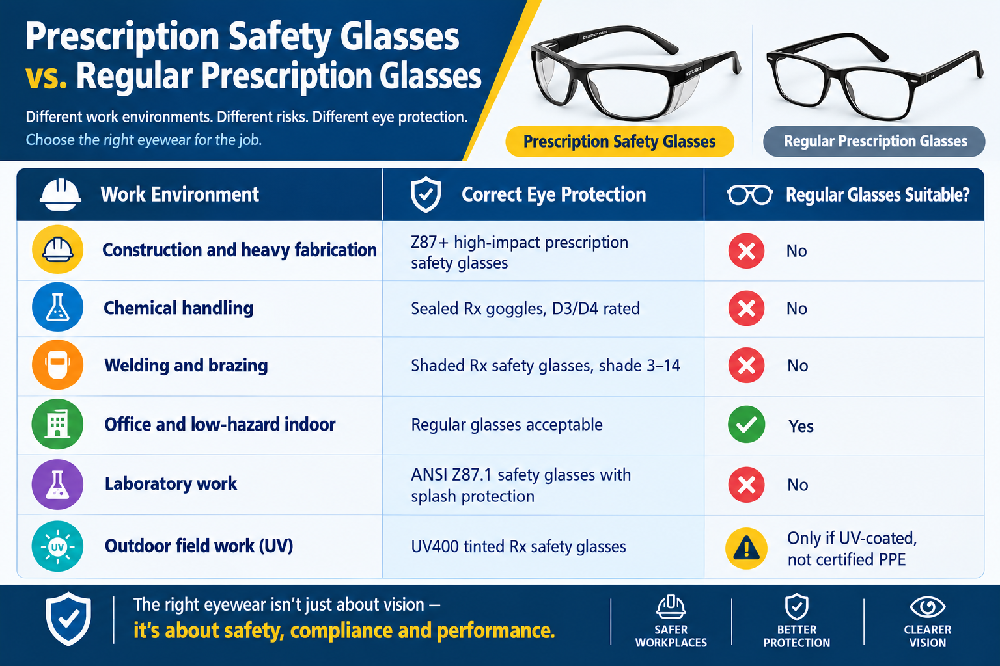
Regular Glasses vs. Safety Glasses in Different Work Environments
Prescription Safety Glasses vs. Over-Glasses Safety Eyewear
Some employees wear safety glasses over their usual prescription glasses. This can work well for short tasks but may be less comfortable during extended periods of use.
Over-glasses safety eyewear is designed to fit over a person's regular prescription glasses. It should still meet the ANSI Z87.1 standard.
Safety Glasses Over Prescription Glasses
Over-the-glasses safety glasses are designed to be worn over regular prescription glasses as a protective outer layer. Such eyewear is an acceptable choice in particular circumstances.
Safety Glasses That Fit Over Regular Glasses
OTG safety glasses that fit over regular glasses must themselves be ANSI Z87.1 certified to be considered compliant PPE. Wearing two pairs of glasses together can cause practical problems, including fogging, optical distortion, added weight, and pressure on the face.
Prescription Safety Glasses vs. Safety Glasses That Fit Over Regular Glasses
The better choice for those who spend a substantial amount of time in a hazard zone is prescription safety glasses.
Where to Buy Prescription Safety Glasses
Prescription safety glasses can be purchased from professional eye specialists, eyeglasses shops, and other retailers that specialize in safety glasses. However, not all retailers offer glasses that meet the ANSI Z87.1 standard. The easiest way to ensure that you are buying approved safety glasses is to look for the Z87 or Z87+ marking on the frame.
Safetyeyeglasses is an online retailer that offers a wide selection of premium safety eyewear brands. We offer approved glasses from premium brands such as Wiley X and Oakley, among others, that are suitable for occupational use. You can buy prescription safety glasses online from the comfort of your own home.
How Much Are Prescription Safety Glasses?
Prices will vary depending on the brand of the frame, the material of the lenses, and the complexity of the prescription. Frames such as a basic certified prescription safety pair of glasses with standard polycarbonate lenses will generally range anywhere from $50 to $150. Premium sport or wrap-around frames from designer manufacturers such as Wiley X or Oakley will range from $150 to $400 or more with a prescription.
Stoggles Vs. Regular Safety Glasses
Stoggles are a style of protective glasses. They combine workplace functionality with a more contemporary look and allow employees to maintain a professional look. In addition to the standard features of ANSI Z87.1 certified protective glasses, stoggles offer integrated side shields, UV400 protection, and anti-fog coating, all in an everyday wearable frame.
Some workers may feel more comfortable wearing them for an entire workday. Both Stoggles and traditional ANSI Z87.1 safety glasses can provide eye protection. The main difference is that traditional safety frames offer the maximum protection, while Stoggles have been created to find a balance between protection and comfort.
Safety Glasses That Look Like Regular Glasses
One of the simplest objections to prescription safety eyewear is that traditional safety frames do not look very good. Modern prescription safety glasses offer a variety of frames that resemble regular reading glasses but still have the optimum eye protection.
What to Look for in Regular-Looking Safety Glasses
The key factor to consider while choosing safety glasses is the applicable safety standard, which includes ANSI Z87.1. Common extra features include wraparound shapes that totally protect the eyes, side shields, and polycarbonate lenses. Since many contemporary titanium and nylon frames are lightweight, they don't put a lot of pressure on the face.
Can Prescription Safety Glasses Look Like Everyday Glasses
Many companies offer prescription safety glasses that look like standard glasses. Brands such as Wiley X, Oakley and other safety glasses brands provide aviator prescription safety glasses, rectangle prescription safety glasses and rimless prescription safety glasses that look more like everyday eyewear than traditional bulky safety glasses.
Other Eyewear Comparisons Buyers Often Consider
Safety vs. regular glasses is one of the most common eyewear decisions. But buyers also frequently compare other eyewear categories. Here is a practical overview of the most common ones.
Sunglasses Over Regular Glasses
Some people wear sunglasses over their prescription glasses for outdoor UV protection. This approach works because the outer lens blocks UV light. It also creates vision distortion and adds weight. Prescription sunglasses or clip‑on tinted lenses are solutions for anyone who needs correction.
Sunglasses That Fit Over Your Regular Glasses
Fit‑over sunglasses are an affordable solution for occasional outdoor use. They are not a substitute for prescription sunglasses if comfort or optical clarity is a priority.
Low Bridge Glasses vs. Regular Glasses
Low bridge glasses, sometimes called low nose bridge glasses, have a modified nose pad and bridge design for wearers whose nose bridge sits lower or flatter on the face. The correction and lens material are identical to regular glasses, but the difference is purely in fit.
Asian Fit Glasses vs. Regular Glasses
Asian-fit glasses are designed to accommodate certain facial features, including a lower nose bridge or higher cheekbones. These faces often have a lower nose bridge and wider cheekbones with the same prescription lenses. The frame dimensions and nose pad design are adjusted.
Anti-Glare Glasses vs. Regular Glasses
Anti-glare glasses, also known as anti-reflective glasses, feature a unique coating on their lenses that lessens reflections from displays, artificial lights, and oncoming headlights. This treatment can also be applied to prescription safety lenses. These are especially useful for people who work in both indoor and outdoor conditions.
Blue Light Glasses vs. Regular Glasses
Blue light glasses filter a portion of blue wavelength light emitted by screens and LED lighting. People who spend extended time in front of digital displays widely use them. Blue light filtering coatings can be added to regular lenses, prescription safety lenses, and progressive lenses.
Computer Glasses vs. Regular Glasses
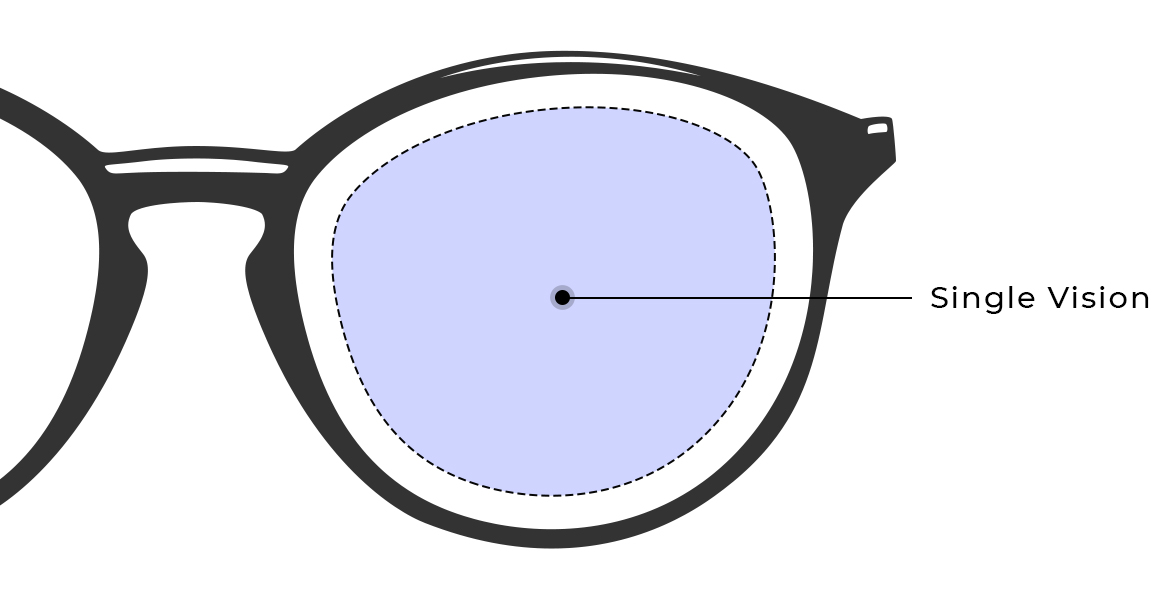
Computer glasses are optimized for the intermediate focal distance of a computer screen, typically 20 to 26 inches. Standard single-vision lenses are ground for either near or distance.
Reading Glasses vs. Regular Glasses
Reading glasses help to correct near vision only. They are ideal for activities done at arm’s length, like reading a book or looking at a printed document. They are not suitable for activities requiring distance vision.
Progressive Glasses vs. Regular Glasses
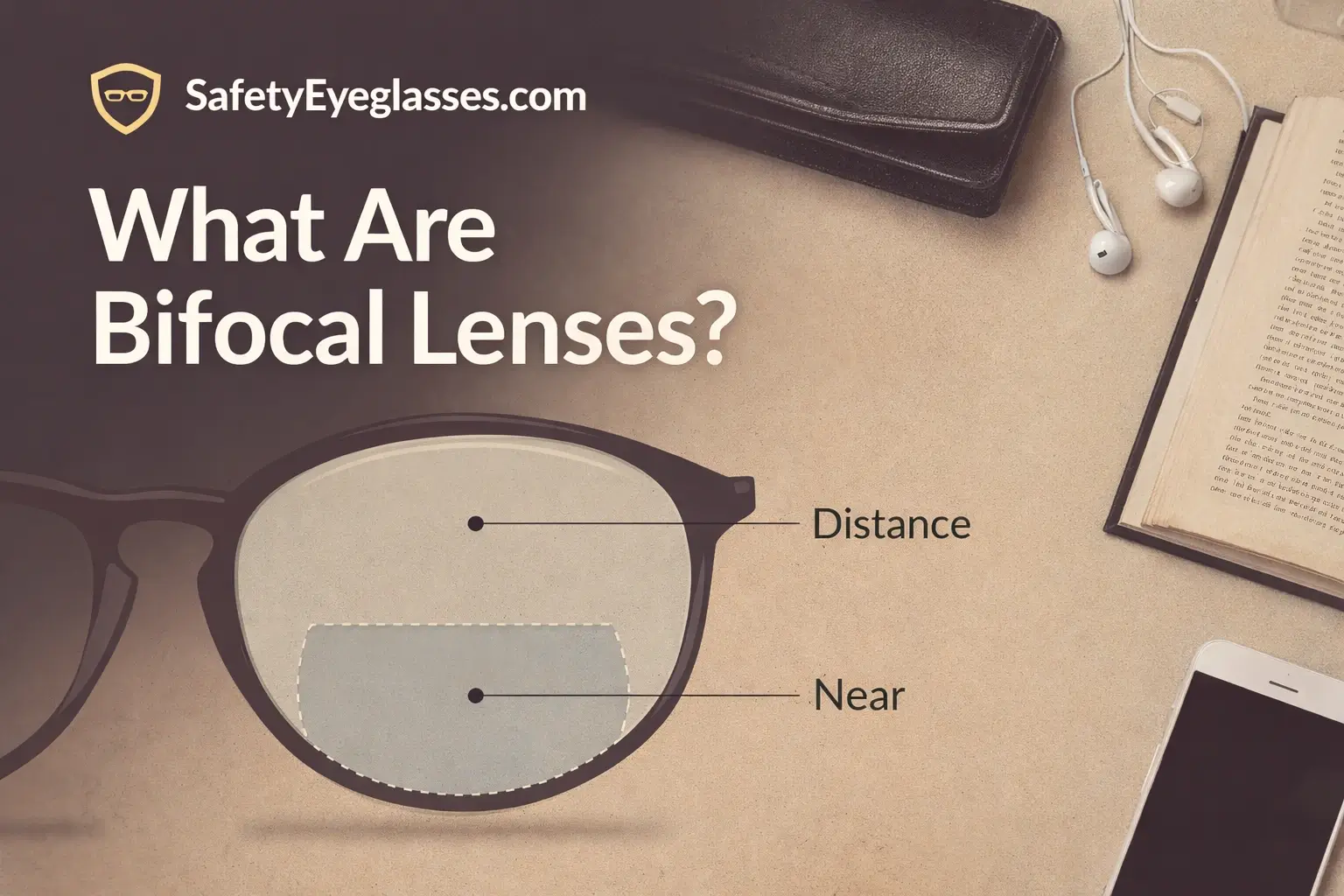
Progressive lenses are multi-focal eyeglasses lenses that correct for near, mid, and distance vision. Unlike bifocals, which have a visible line separating separate viewing regions, they shift gradually throughout the lens. Progressive prescription safety glasses are available; however, their suitability depends on the worker’s vision needs. Meta smart glasses cannot be used over standard prescription frames since they will not provide adequate protection.
How to Choose the Right Eyewear for Your Needs
First, determine the hazard level of your work area. In any workplace eye protection, workers must choose eyewear appropriate to the identified hazards. If you require vision correction, you should use prescription safety eyewear.
When Prescription Safety Glasses Are the Better Choice
For workers who wear corrective lenses and spend time in a regulated eye hazard environment, prescription safety glasses are the right solution. They eliminate the optical distortion and fogging problems of OTG solutions.
When Over-Glasses Safety Eyewear May Be Suitable
OTG safety eyewear is a reasonable short-term solution for occasional or limited-duration hazard exposure. For anyone working in a hazard zone regularly, OTG is a compromise, not a solution.
Prescription Safety Glasses or Regular Glasses — Which One Is Better?
For office use where there are no serious eye risks, regular glasses work just fine. They correct vision, come in styles, and don’t need any special approval.
In any workplace where eye hazards are present, regular glasses do not protect the eyes at work. They are not the same as safety eyewear.
The distinction is not about preference. It is about whether the eyewear on a worker's face will actually protect their eyes when something goes wrong.
See What's New
Get an exclusive first look at our latest promotions and collections!

50% OFF on Safety Frames
When Lenses Are Purchased. Enter your email to unlock this exclusive safety eyewear deal.


Leave your comment