





*Exclusions apply. By subscribing, I confirm that I am 18 years of age or older and agree that my personal information may be used by SafetyEyeglasses.com to send me news, special offers, and other marketing communications. For more details, please review our Terms & Conditions and Privacy Policy. You may unsubscribe at any time.
- Safety Glasses
Collection
Feature
Shop By
- Vouchers

Blog
Prescription Safety Glasses: Complete Guide to Standards, Lenses, Fit and Buying
Workplace eye risks can occur suddenly. Every year, thousands of eye injuries are caused by flying metal fragments, liquid droplets, and airborne dust. The impact protection and protective covering offered by certified safety eyewear are better than those of standard prescription glasses. A regular prescription frame is not necessarily designed or tested to protect against workplace impacts.
The right prescription safety glasses combine vision correction and certified impact protection. Regular prescription glasses don't need to be worn over heavy goggles. For long shifts, trendy protective frames are composed of lightweight, resilient materials and offer clear optical correction.
This prescription safety glasses guide explains the main things to consider when choosing certified protective eyewear. We will discuss ANSI standards, special lens materials, frame sizing, and hazard matching. It will help keep your eyes safe, whether you are on the manufacturing line or doing it at home.
What Are Prescription Safety Glasses?
Prescription safety glasses combine custom vision correction glasses with high-impact protective frames. The frame and lenses are designed and tested for the protective requirements claimed by the specific product, unlike regular corrective eyewear. They are equipped with shatterproof lenses, strengthened frame bridges, and built-in side shields to prevent debris from flying from the sides.

Special glasses can shield your eyes from a variety of challenging situations. Mechanics rely on them when working underneath vehicles where rust and oil drip constantly. Construction workers use them when cutting to shield themselves from flying concrete dust and wood splinters. For laboratory workers to protect their corneas from chemical spills, fitted frames are crucial. Prescription protective glasses are also used by everyday woodworkers and home DIYers when operating power tools.
Prescription Safety Glasses vs. Regular Glasses
Regular glasses are meant for reading, driving and typical office work. They have thin glass or plastic lenses that easily break with physical pressure. They also have wide peripheral gaps, leaving your eyes vulnerable to flying debris along the sides of your temples.
Certified Rx safety glasses are made from thick shatterproof lenses tested under impact conditions and with durable safety frames. Official safety markings are stamped directly on the frame temples and corners. When a working hazard necessitates eye protection, regular prescription glasses should not be used as an alternative.
Feature Comparison | Regular Everyday Glasses | Certified Prescription Safety Glasses |
Impact Resistance | Very Low; lenses crack or shatter easily | High; certified for high-velocity mass impacts |
Frame Durability | Thin metal or delicate acetate plastic | Reinforced Triloid nylon or heavy-duty metals |
Side Coverage | Exposed sides leave eyes vulnerable | Integrated side shields or wrap-around designs |
Safety Markings | None; uncertified for hazardous work | Official Z87 or Z87+ stamps on frames and lenses |
Workplace Compliance | Fails OSHA industrial requirements | Fully complies with OSHA and ANSI standards |
Who Needs Prescription Safety Glasses?
Prescription safety glasses for work are necessary for anyone working in areas with flying hazards, liquid chemicals, or extreme light. Everyday job sites expose workers to hazards that can change from task to task and may require certified protective eyewear.
- Construction Workers: Flying concrete chips, nail gun hazards, and wood dust during sawing.
- Manufacturing Operators: Metal shavings, high-speed machine lathes, and mechanical debris.
- Laboratory Technicians: Corrosive liquid chemical splashes and dangerous biological aerosols.
- Auto Mechanics: Falling under-chassis rust, battery acid splashes, and grinding sparks.
- Electricians: Unexpected electrical arc flashes, wire ends, and dust particles from the ceiling.
- Woodworkers: Toxic adhesive fumes, flying wood chips, and sawdust.
- Medical workers: Airborne germs, sanitizing agents, and bodily fluid splashes.
- Landscapers: Heavy dust, low branch impacts, and flying rocks from lawnmowers.
- Shooting Enthusiasts: High-speed shell ejects, gunpowder residue, and target fragments.
- Home DIYers: Shattering drill bits, wall plaster dust, and chemical paint splashes.
OSHA's selection guidelines place a strong emphasis on assessing the real risks and taking into account circumstances in which several risks occur.
ANSI/ISEA Z87.1-2025 Explained
ANSI/ISEA Z87.1-2025 sets requirements for protective eye and face protection. In order to reduce avoidable visual injuries, federal OSHA laws enforce these requirements throughout industrial workplaces. OSHA requires appropriate eye and face protection when workers face recognized eye hazards.
For prescription wearers, OSHA-approved prescription safety glasses or be designed to fit over prescription eyewear without disturbing the proper position of the lenses. Always check the product's actual safety markings and your workplace requirements rather than relying on an 'OSHA approved' marketing claim.

Frame and lens markings indicate the exact level of impact protection provided by your glasses:
- Basic Impact (Z87 Mark): Lenses withstand a steel ball dropped from a height of 50 inches.
- High Impact (Z87+ Mark): A quarter-inch steel ball moving at 150 feet per second is stopped by the lenses.
- Z87-2 Mark: Indicates the frame can hold custom prescription lenses while complying with safety rules.
- D3/D4 Markings: Verify defense against tiny dust particles (D4) and liquid splashes (D3).
Standards are crucial, but this does not imply that a single pair is appropriate for every work. Always comply with the rules for occupational PPE and danger assessments.
Prescription Lens Types
Selecting the right lens design will allow for clear vision and reduce eye fatigue with complex tasks. In modern optical labs, precise corrective prescriptions are built into impact-proof lens materials.
- Single-Vision Lenses: Correct for one distance of viewing, like long-distance driving or close-up bench work.
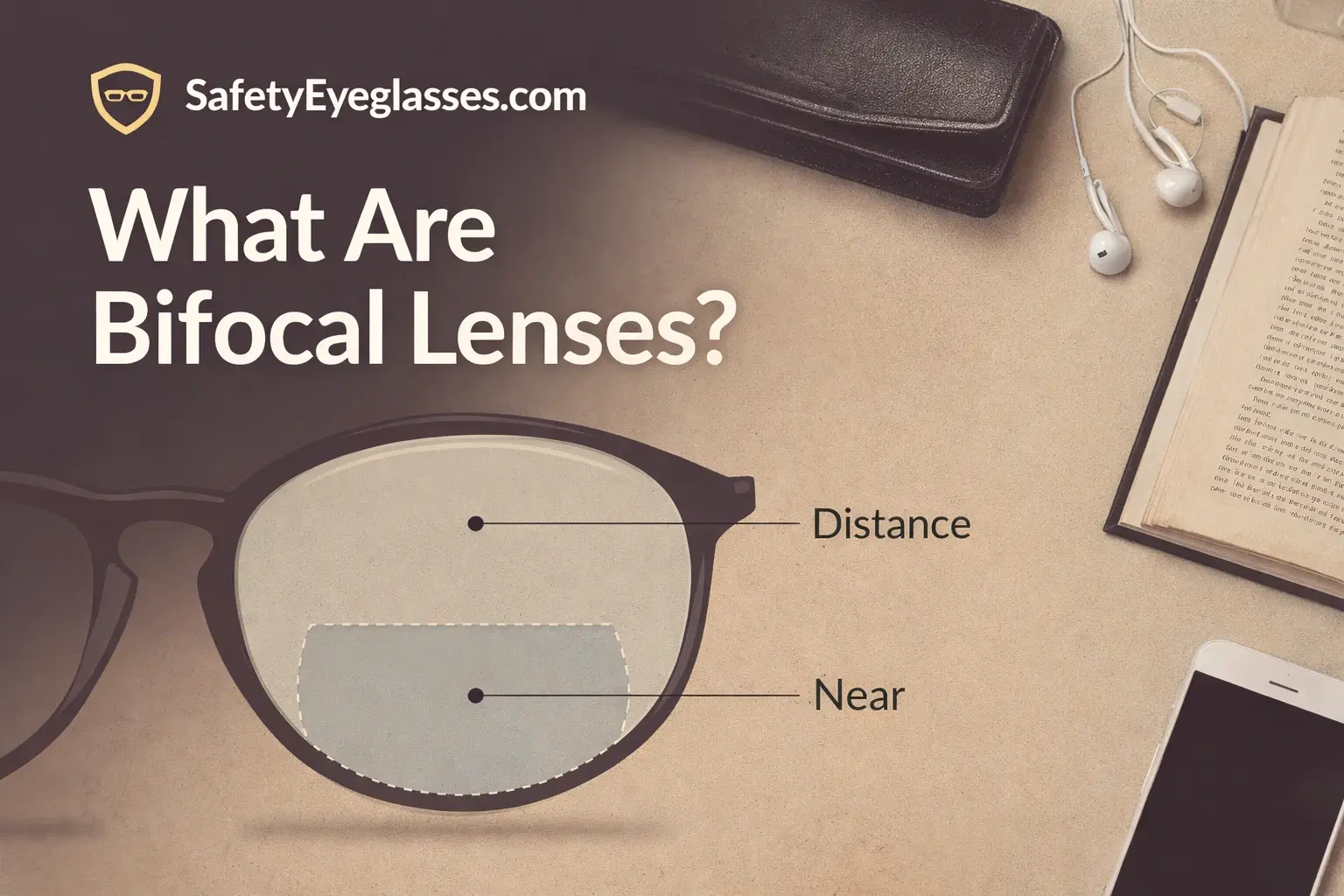
- Bifocal Glasses: Contain two separate zones for vision, with a line demarcating the two zones for near and distant vision.
- Progressive Lenses: Provide a smooth, gradual lens change between distance, intermediate, and reading zones.
- Trifocal Lenses: Offer three distinct focal points for distance, intermediate computer work, and close-up reading.
- Reader Safety Lenses: Use non-prescription distance tops with magnification segments built into the bottom.
Progressive prescription safety glasses enable technicians to read blueprints at close range without compromising comfort.
Best Lens Materials
The materials for the protective lenses will affect the impact resistance, weight and optical clarity of your lenses. No one material is perfect for all prescriptions and situations.
Material | Main Strength | Potential Choices | Good Use |
Polycarbonate | High impact resistance, lightweight | Optical clarity may not match premium alternatives for every wearer | General industrial and high-impact work |
Trivex | Lightweight, impact resistance, strong optics | Often costs more | Daily wear where comfort and clarity matter |
High-index plastic | Thin for stronger prescriptions | Usually less impact-focused than polycarbonate | Strong prescriptions in suitable safety frames |
Glass | Excellent optical clarity and scratch resistance | Heavy and generally unsuitable for many impact applications | Limited speciality situations |
- Polycarbonate: The industrial standard for protective eyewear. Polycarbonate prescription safety glasses offer extreme impact resistance, lightweight wear, and UV protection.
- Trivex: Combines high impact resistance with superior optical clarity, making it ideal for sharp visual detail.
- High-Index Plastic: Bends light more efficiently, creating significantly thinner lenses for strong, heavy prescriptions.
- Glass: Offers unmatched scratch resistance but heavy weight and poor impact resistance, making it rare in modern safety frames.
The frame and complete safety system still matter. Do not judge protection by lens material alone.
Lens Coatings and Features
Adding functional coatings to your lenses optimizes performance across changing workplace environments.

- Anti-Fog Coating: Prevents condensation on the lens in case of heavy sweating or sudden temperature change. Anti-fog prescription safety glasses allow you to see clearly.
- Scratch-Resistant Coating: Protects soft plastic surfaces against coarse abrasive dust, grit, and accidental drops.
- Polarized Filters: Cancel out harsh reflected glare from water, hood metal, and wet pavement in outdoor work situations.
- Photochromic Lenses: Darken automatically in bright sunlight and lighten inside for smooth light adaptation.
- Anti-Reflective Coating: Minimizes distracting reflections from overhead fluorescent lights, which can cause visual fatigue during night shifts.
- Tinted lenses: Tints vary in how they affect contrast and glare perception. Tint is not just for personal taste, but should be based on the environment.
Safety Glasses vs. Safety Goggles
The decision between protective glasses or sealed goggles is completely dependent on the hazards involved at your job site.
Safety glasses have hard temples and built-in side shields to protect eyes from impact hazards. They are ideal for general construction, mechanics and carpentry jobs to provide good air circulation.
Sealed goggles provide a full, airtight seal over the entire eye socket, with soft rubber or foam gaskets. They block harmful dust, chemical splashes and airborne fumes from getting into your eyes. When choosing between goggles and glasses, always follow your workplace hazard assessment.
Goggles create more coverage around the eyes. That makes them more appropriate for certain splash, dust, and fine-particle situations.
Hazard | Safety Glasses | Goggles |
Flying debris | Often appropriate when correctly rated | Appropriate |
General dust | May be suitable | Often provides better coverage |
Fine particles | Depends on design | Often preferable |
Chemical splash | Limited by design | Usually preferred |
Wind-blown debris | Wrap styles can help | Strong coverage |
Need to wear over regular glasses | Not applicable if prescription | Over-prescription goggles available |
Choose Eyewear by Profession and Hazard
Proper eye protection is matched to hazards, avoiding unnecessary injury in the workplace.
So, begin with hazard, not brand.
Hazard | Example Environment | Useful Features to Consider |
Flying debris | Construction, machining | High-impact protection, side coverage |
Chemicals | Laboratory, industrial cleaning | Appropriate splash protection, often goggles |
Dust | Woodworking, construction | Wrap coverage or suitable goggles |
UV | Landscaping, outdoor work | Verified UV protection |
Glare | Roads, water, outdoor sites | Polarized options where appropriate |
Fog | Cold, humid, high-temperature work | Anti-fog treatment |
Heat | Industrial operations | Task-specific eye and face protection |
Optical radiation | Welding and specialized equipment | Correct filter and task-specific protection |
Fit and Measurements
Proper frame sizing ensures your safety glasses stay comfortable and secure throughout long work shifts.
Accurate measurements prevent annoying frame slippage and eliminate peripheral gap risks on site:
- Pupillary Distance (PD): The precise millimetres that separate the centers of your pupils. The optical center of the lens is precisely aligned with your eyes due to accurate PD.
- Frame Width: The total horizontal width of the frame front. The frame should match your face width without pinching your head.
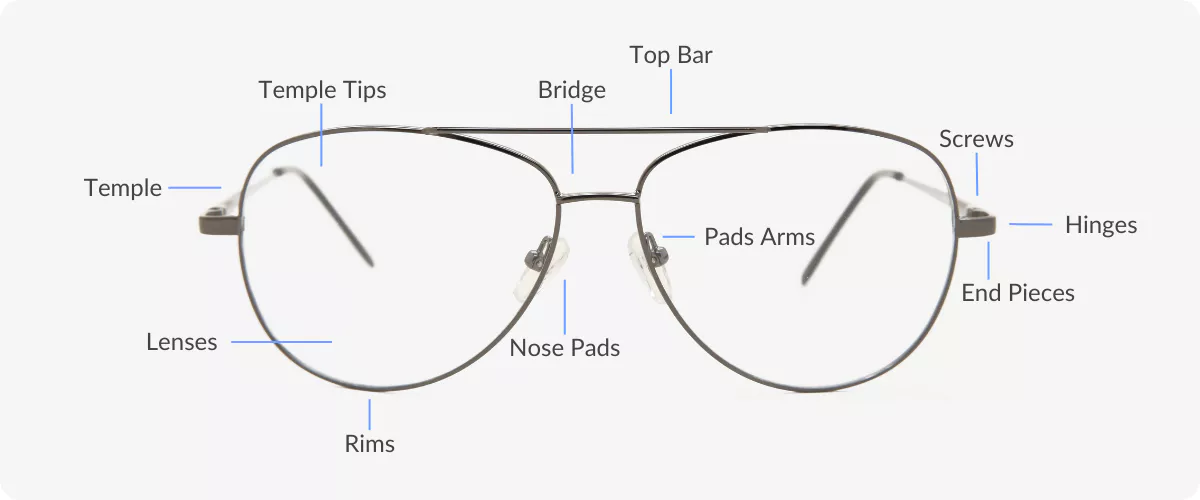
- Bridge Width: The distance between the two lenses across your nose bridge. Adjustable nose pads help secure a custom non-slip fit.
- Temple Length: The length of the frame arms holding the glasses over your ears securely.
How to Buy Prescription Safety Glasses Online
Buying prescription safety glasses online can be convenient, but it's important to choose carefully.
- Use a recent prescription
Consult your eye care specialist for a current prescription.
- Confirm your PD
Enter the requested pupillary distance accurately. Some providers require separate right and left measurements.
- Identify the hazard
Determine whether the primary concern should be impact, dust, splash, UV, glare, fog or another form of exposure.
- Confirm certification and markings
Check the official product specifications.
- Select the frame
Consider coverage, side shields, wrap, bridge design, material, and compatibility with other PPE.
- Select the lens type
Depending on your vision needs, you can select single vision, bifocals, progressive, trifocals, or a reader.
- Select the lens material
Polycarbonate, Trivex, high-index, and other materials have different features.
- Add useful coatings
Consider anti-fog, scratch resistance, anti-reflective, UV, polarized, photochromic, and tint features.
- Confirm the size
If available, compare lens height, bridge, temple length, and frame width.
- Check shipping and refunds
Prescription eyewear is personalized. Check remake, return and exchange policies before ordering.
Once the glasses are received, check them before wearing them for hazardous work. Inspect frame, lenses, side protection, hinges, nose pads, markings and fit.
If the glasses move excessively or your vision seems incorrect, do not simply adapt to them. Contact the optical provider for guidance.
Brands Overview
Several brands offer quality prescription safety eyewear.
- Wiley X: Military grade durability, wraparound designs and patented removable foam dust gaskets.
- Pentax: Offers classic industrial safety frames combining reliable metal construction with modern comfort features.
- ArmourX: Elegant executive safety frames that look good on both shop floors and office settings.
- Onguard: Robust prescription industrial safety glasses made for demanding production settings.
- Guardian: Affordable, impact safety frames with a design for maximum protection on busy job sites.
- Hudson: Certified ANSI impact-resistant and traditional heritage styling for all-day protection options.
- Stoggles: Modern lightweight protective eyewear with seamless top and side shields for clinical use.
- Artcraft: Produces classic, comfortable safety frames tailored for industrial technicians and utility crews.
- DVX: Protective eyewear for outdoor use with durable lenses and sporty style.
Care, Maintenance and Replacement
Maintaining your safety glasses can prolong their life and ensure that you can see clearly while working. Use a smooth microfiber cloth and a precise eyewear cleaner to clean the lens rather than a shirt tail or stiff paper towel. Store your glasses in a durable case while not in use.
Look for:
- Deep scratches that interfere with vision
- Cracks or chips in the lenses
- Damaged or loose frames
- Broken hinges
- Worn nose pads
- Loose side shields
- Damaged coatings
- Deformed temples
- Missing safety markings where applicable
Travelling With Prescription Safety Glasses
When you travel, wearing safety glasses helps you stay prepared for work. Always keep your glasses in a protected hard case rather than a tool bag. Bring a copy of your prescription and an additional pair of glasses while travelling for long periods of time for work. For everyday cleaning, always have a microfiber cloth and a small amount of cleaning spray in your purse.
Conclusion
Choosing the appropriate safety eyewear begins by pairing certified frames with your workplace hazards. Custom prescription safety glasses combine clear vision with ANSI Z87+ impact protection. Advanced protective frames decrease the pain associated with bulky eyeglasses over delicate street glasses.
Keep your vision safe on each shift with quality protective eyewear. Check out our complete selection of prescription safety glasses on Safetyeyeglasses and place your order now.
FAQ’s
Can regular prescription glasses be used as safety glasses?
Regular prescription glasses cannot be used as safety glasses because they lack ANSI Z87.1 impact ratings and protective markings.
What does Z87+ mean on prescription safety glasses?
Z87+ on prescription safety glasses indicates high-impact protection and meets ANSI requirements.
Which lens material is suitable for safety glasses?
Polycarbonate is the most suitable lens material for safety glasses due to its high impact resistance and lightweight features.
Can progressive lenses be used in safety glasses?
Progressive lenses can be used in safety glasses when the frames and lenses have proper ANSI Z87.1 compliance markings.
Are side shields required on prescription safety glasses?
Side shields are required on prescription safety glasses when workers face flying particle hazards from side angles.
Can prescription safety glasses have anti-fog lenses?
Prescription safety glasses can have anti-fog lenses to maintain clear vision in humid or changing conditions.
How should prescription safety glasses fit?
Prescription safety glasses should fit securely without pinching, slipping, or leaving gaps at the sides during normal work movement.
When should safety glasses be replaced?
Safety glasses should be replaced when lenses are scratched, frames are cracked, coatings are damaged, or markings are no longer visible.
Can scratched safety glasses still be used?
No, scratched safety glasses reduce optical clarity and can compromise impact protection.
Where can prescription safety glasses be purchased online?
You can order fully customized, ANSI-compliant pairs online at SfetyEyeGlasses.
See What's New
Get an exclusive first look at our latest promotions and collections!

50% OFF on Safety Frames
When Lenses Are Purchased. Enter your email to unlock this exclusive safety eyewear deal.


Leave your comment